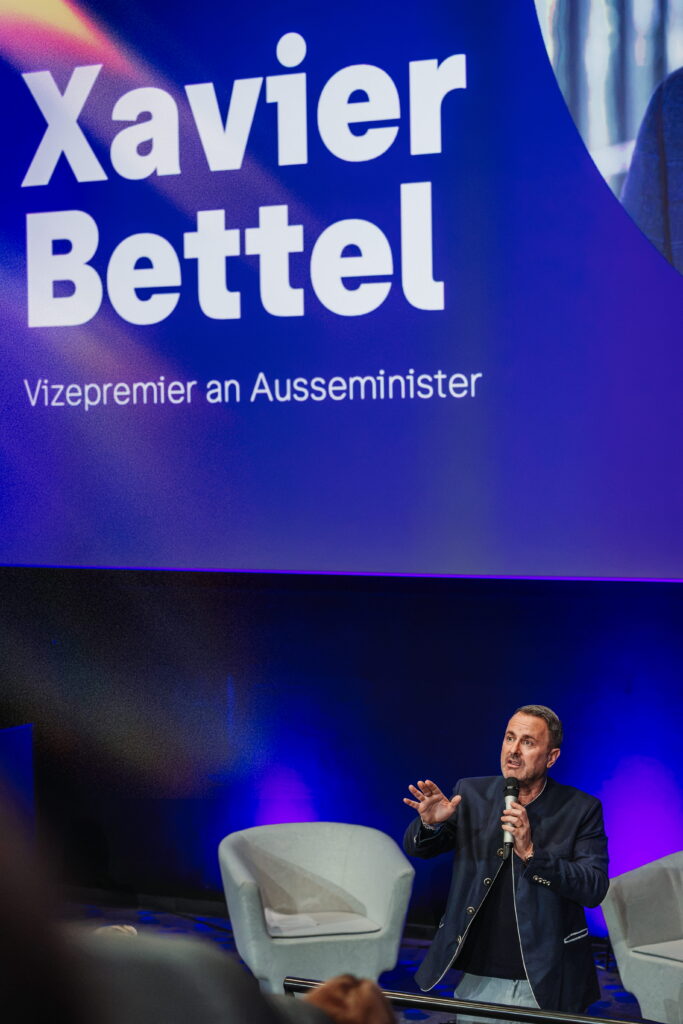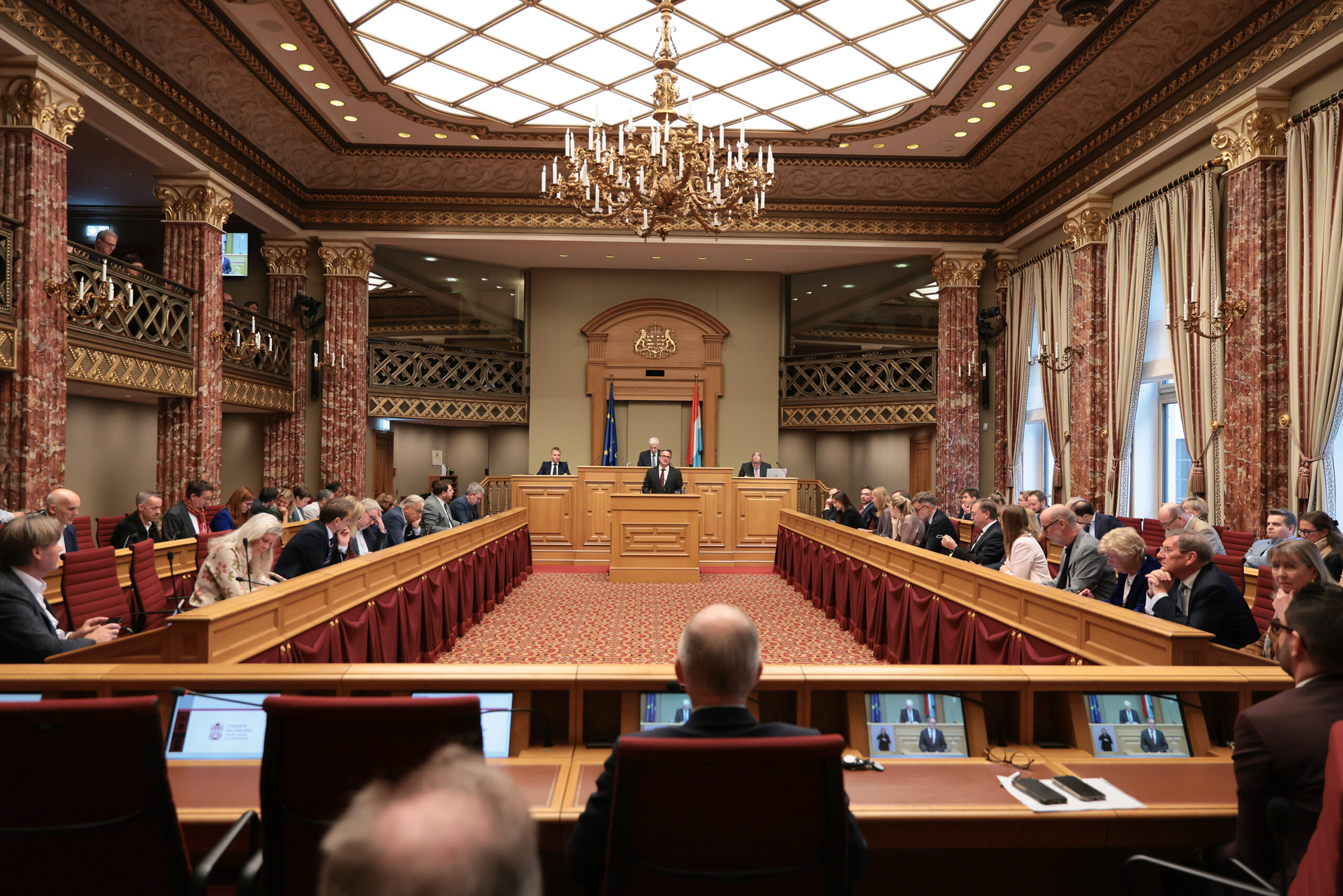


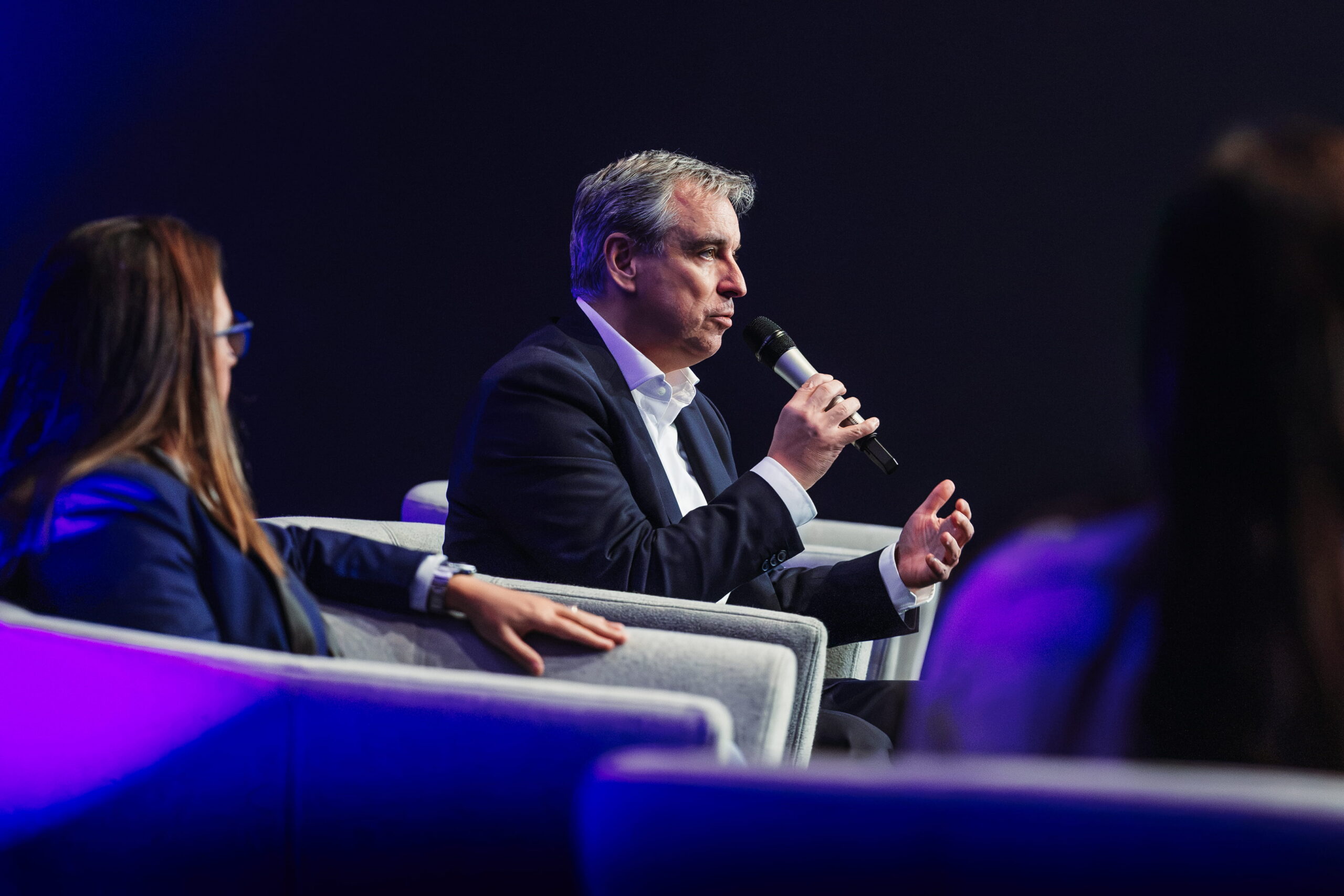
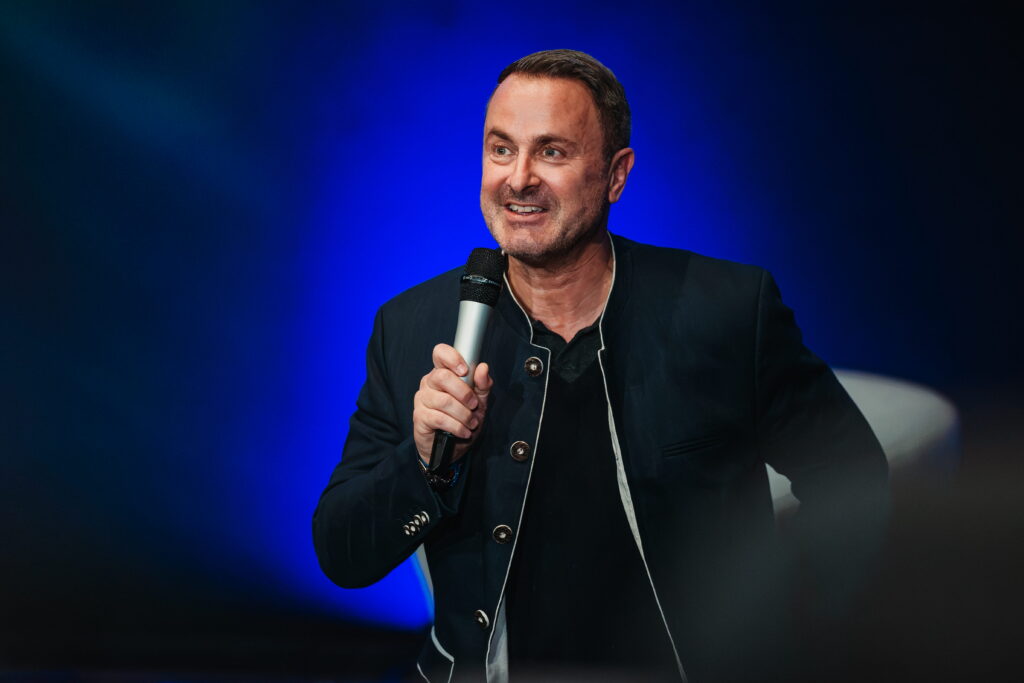
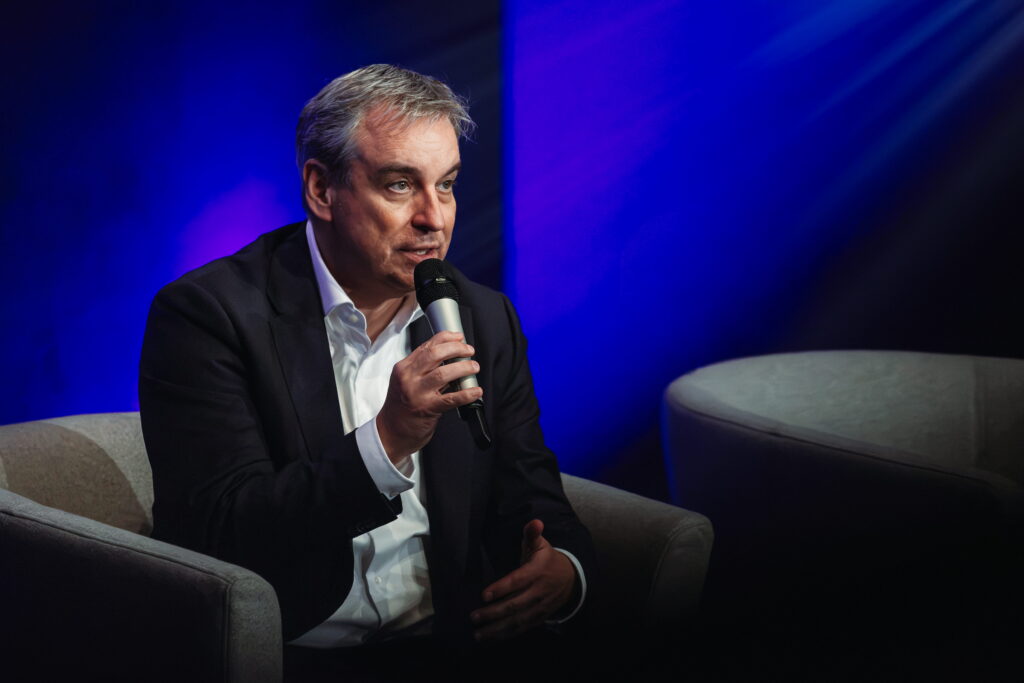
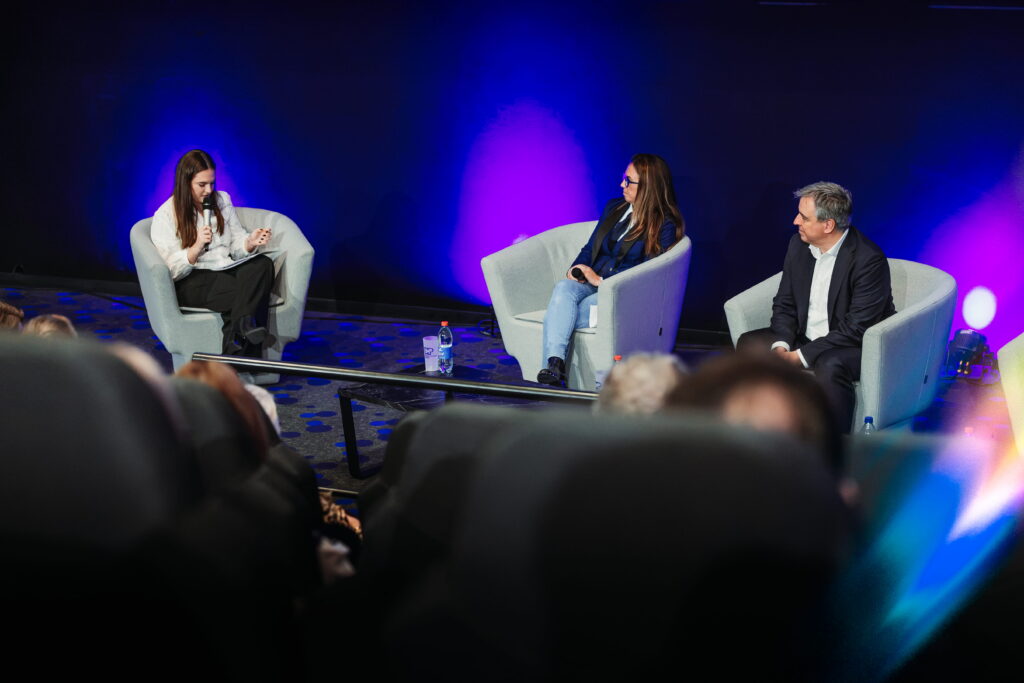
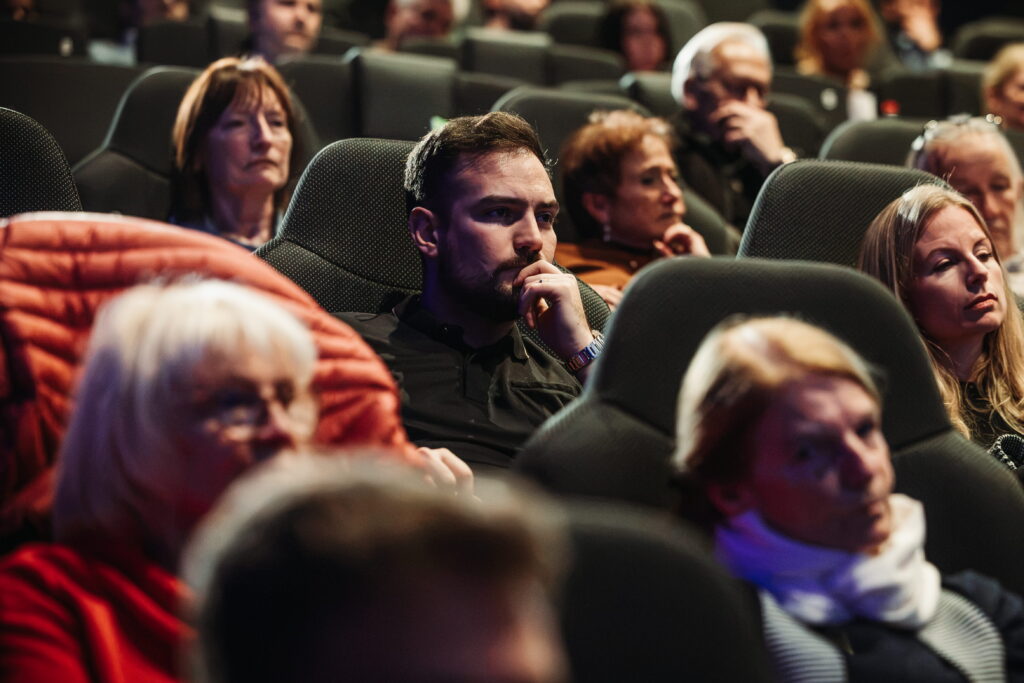
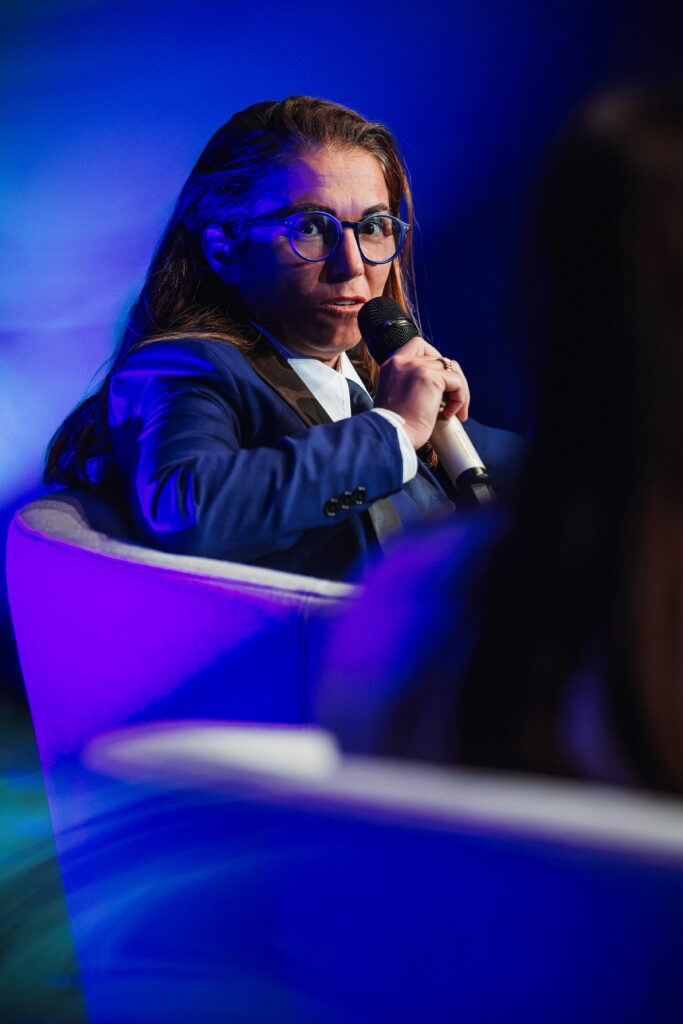
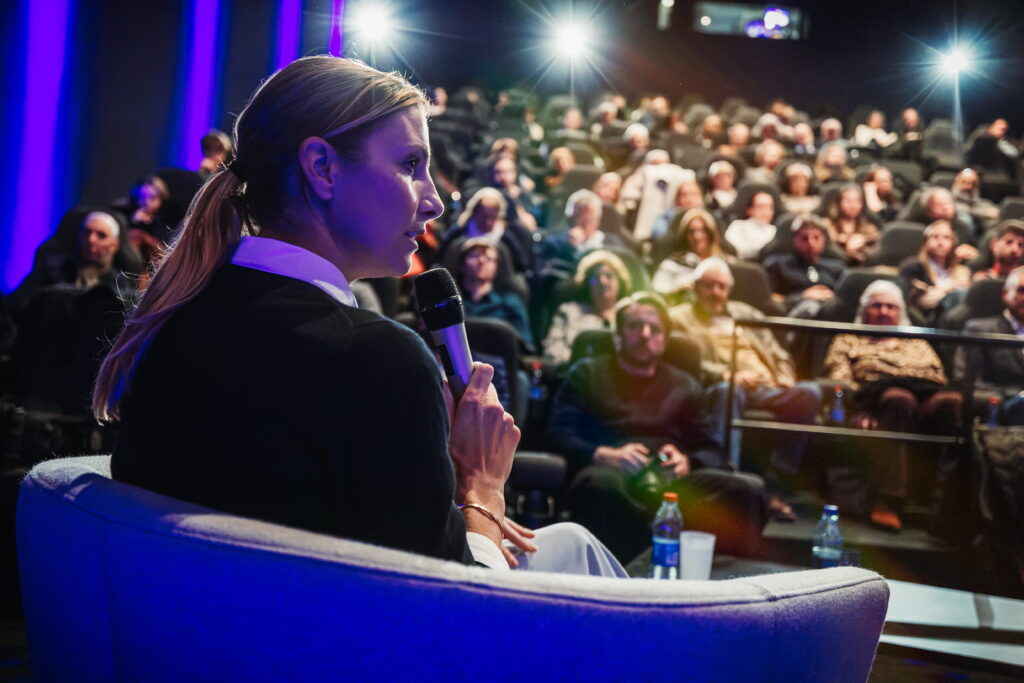
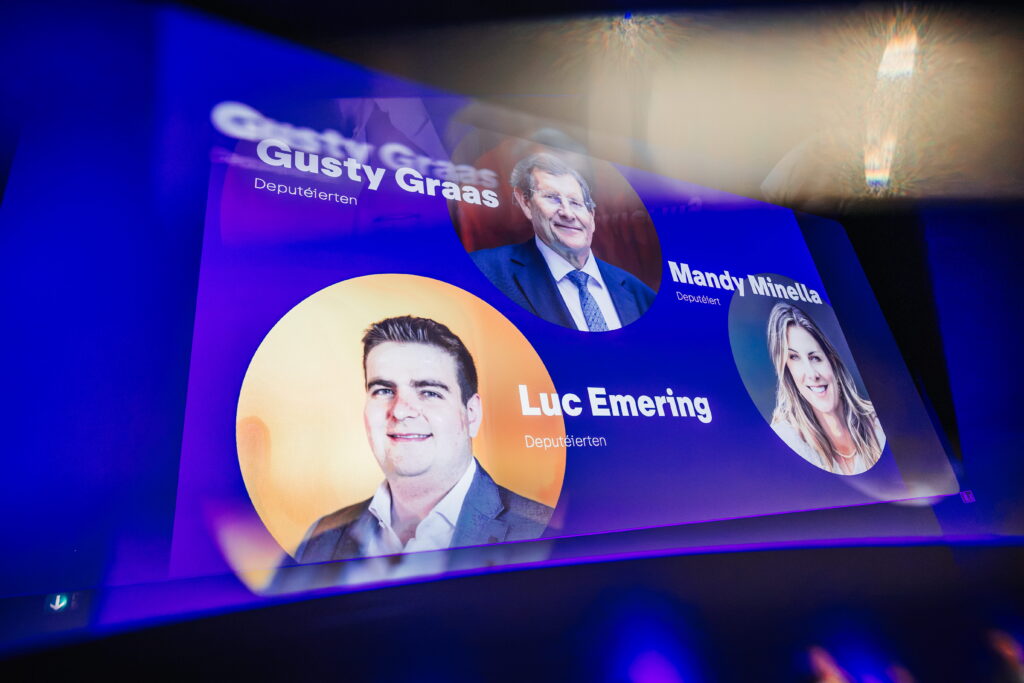
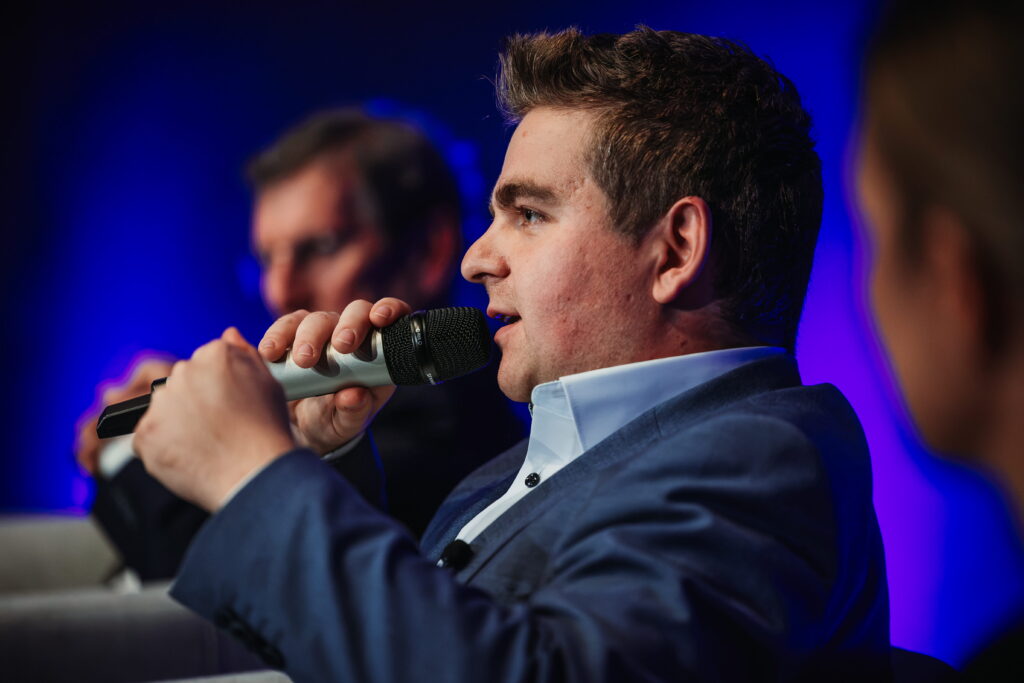
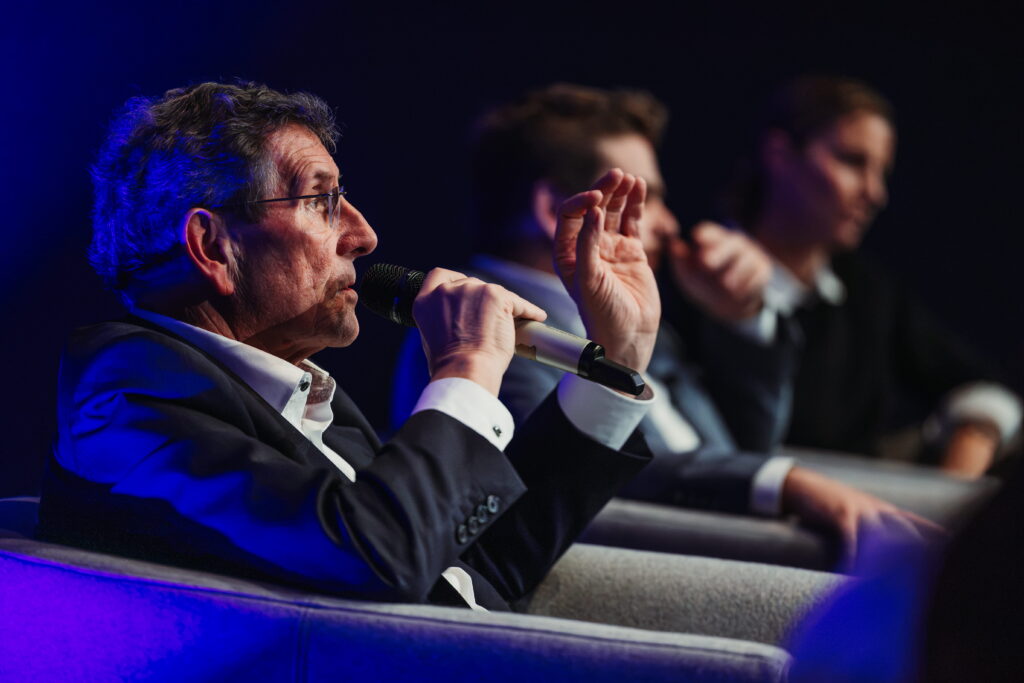
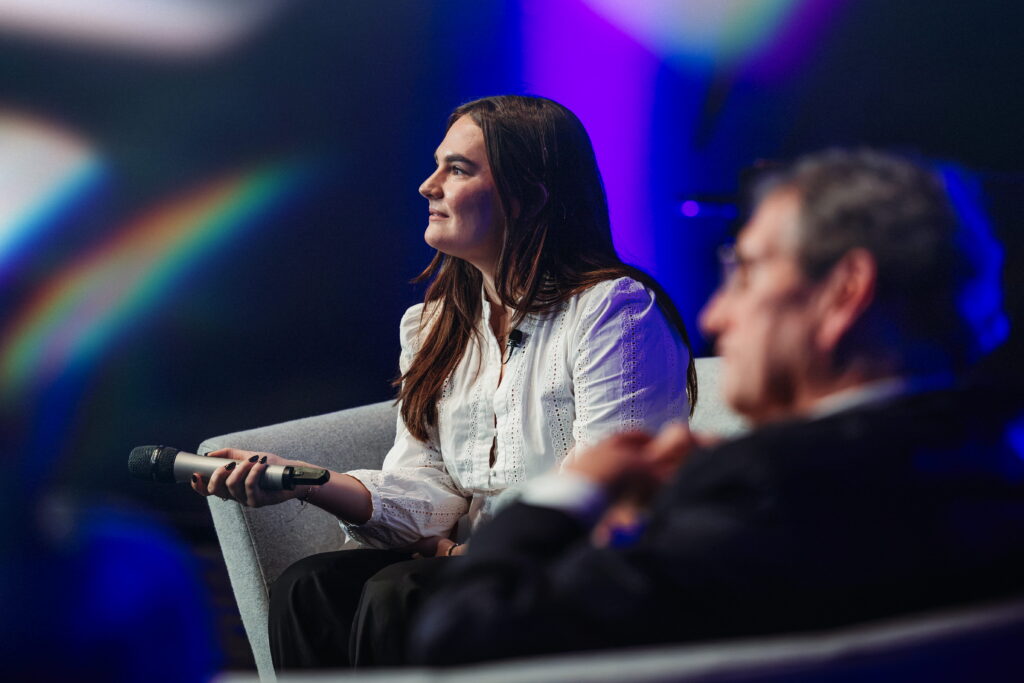
A packed auditorium at Kinepolis, a wide range of topical issues and an opportunity to speak directly with residents. On Tuesday, 17 November 2026, the discussion at Belval revolved around a central question: “How can we create fair opportunities for everyone?” Deputy Prime Minister and Minister for Foreign Affairs Xavier Bettel, Minister of Education and Housing Claude Meisch, and MPs for the southern constituency Barbara Agostino, Mandy Minella, Luc Emering and Gusty Graas took part in the event. Claire Pepin moderated the evening.
Speaking in a place where steel was once produced and which is now a hub for knowledge, research and business, Xavier Bettel recalled Luxembourg’s remarkable ability to reinvent itself. Social progress and solidarity had been essential to that transformation. Today, too, politics must respond to people’s real concerns without giving in to the temptation of simplistic, populist promises.
“The difference between a democrat and a populist is that a democrat often gives complicated answers to the simplest questions, while a populist gives the simplest answers to the most complicated questions.” – Xavier Bettel

Giving young people a future
Housing was one of the evening’s central themes. Claude Meisch expressed understanding for the impatience of young people, who increasingly doubt whether they will ever be able to afford a home. The government is therefore investing heavily in affordable housing, with more than three times as much funding planned for 2027 as in 2023. Alongside housing projects specifically aimed at young adults, the interest subsidy for young first-time buyers is set to increase by 50%.
“If we cannot offer young people in Luxembourg a future, a home, a place where they feel they belong and can build their lives, then something vital is missing from this country.” – Claude Meisch
One question from the audience addressed the risks of buying a property off-plan (VEFA). The minister explained that work was under way on legislation to provide buyers with stronger protection. If a developer goes bankrupt, there must be a guarantee that the property will actually be completed.
A school that gives every child a chance
Equal opportunities begin at school. The minister pointed out that children enter the education system with very different language backgrounds. The language spoken at home should not determine their chances of success at school.
MP Barbara Agostino, meanwhile, called for vocational training to receive greater recognition. University is not the right path for every young person. The reform of vocational training will, among other things, make apprenticeship allowances more consistent, provide better support for companies and strengthen the role of workplace mentors.
“Vocational training is a choice, and one that is every bit as valuable as an academic education.” – Barbara Agostino
Supporting families was a recurring theme throughout the evening. Barbara Agostino presented the reform of the Chèque-service accueil childcare support scheme, due to take effect next year. More transparent fees, the removal of certain surcharges and billing that better reflects actual childcare hours are expected to save parents a total of €79 million a year. At the same time, investment will be made in both the quality and the capacity of childcare services.
A question of solidarity and fairness
MP Mandy Minella highlighted the planned increase in family allowances from January: an additional €45 per month for children under 12 and €60 for those aged 12 and over. This would give families more breathing room in their budgets, including for sport, music and cultural activities. At the same time, the state must provide more targeted support to people facing financial difficulties. The action plan to combat poverty aims to make assistance easier to access.
Another of Mandy Minella’s priorities was the mental health of children and teenagers. She warned of the dangers of excessive smartphone use, cyberbullying and harmful content on social media, and argued for a minimum age of 16 for access to social media platforms.
“We must protect young people. But we must not leave parents to face these challenges alone.” – Mandy Minella
Climate action that makes a difference in people’s lives
How can the energy transition succeed without placing an excessive financial burden on households? For Luc Emering, an important part of the answer lies in simplifying state support. Thanks to the advance funding of solar installations, households no longer have to pay the full cost upfront. From 2027, the same principle is expected to apply to heat pumps.
Gusty Graas focused on protecting water resources and biodiversity. There is still much to be done, particularly when it comes to the condition of Luxembourg’s rivers and streams. More advanced wastewater treatment plants and the restoration of natural waterways could make a significant difference. Despite the challenges posed by climate change, he urged people to remain optimistic and take action.
“We must not sink into a collective depression. There is still time to change course.” – Gusty Graas
Luc Emering also stressed the importance of agriculture. To produce food more sustainably and organically, farmers need better opportunities to sell their products and, above all, fair prices. Restopolis, the school catering system that promotes local and organic produce, could serve as a model for other public institutions, such as hospitals.
“Farmers want to be able to sell what they produce at a fair price. That matters far more to their businesses than any grant or subsidy.” – Luc Emering
Sécherheet an enger Welt a Beweegung
Xavier Bettel underlined the importance of international law, diplomacy and strong European cooperation. For a small country such as Luxembourg, an international order founded on shared rules and mutual respect is fundamental.
Gusty Graas explained why Luxembourg and Europe need to step up their defence efforts. Supporting Ukraine and investing in security are not just about protecting one country: they are also about safeguarding peace and freedom across Europe.
The evening ended with a clear message: dialogue with citizens must not be limited to election campaigns. Xavier Bettel thanked the many people who had taken the time on a Tuesday evening to discuss the questions shaping the country’s future.