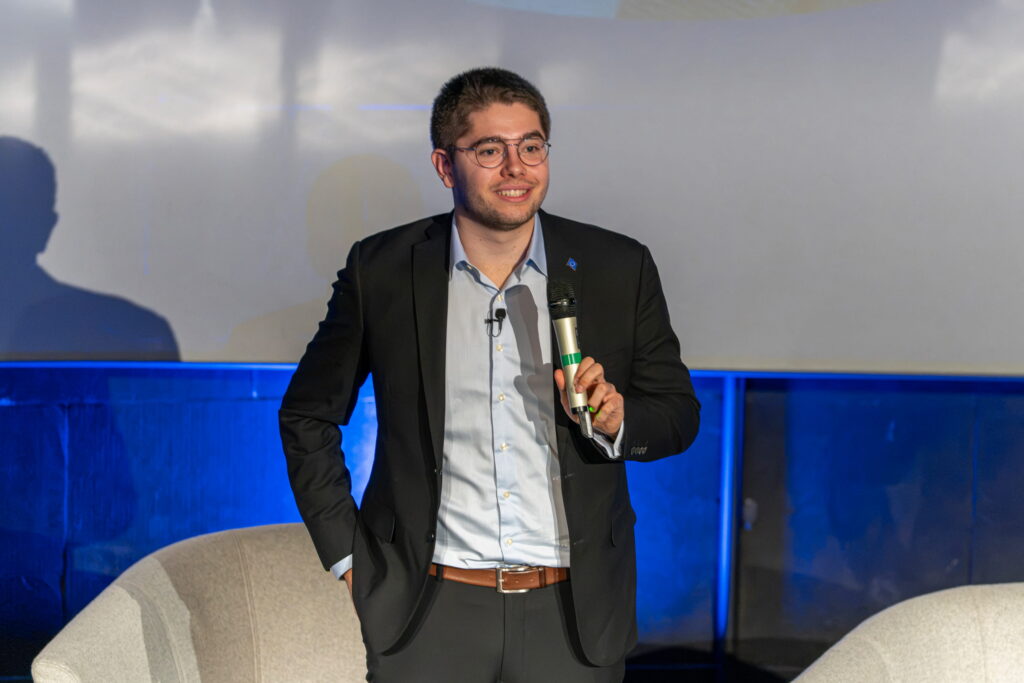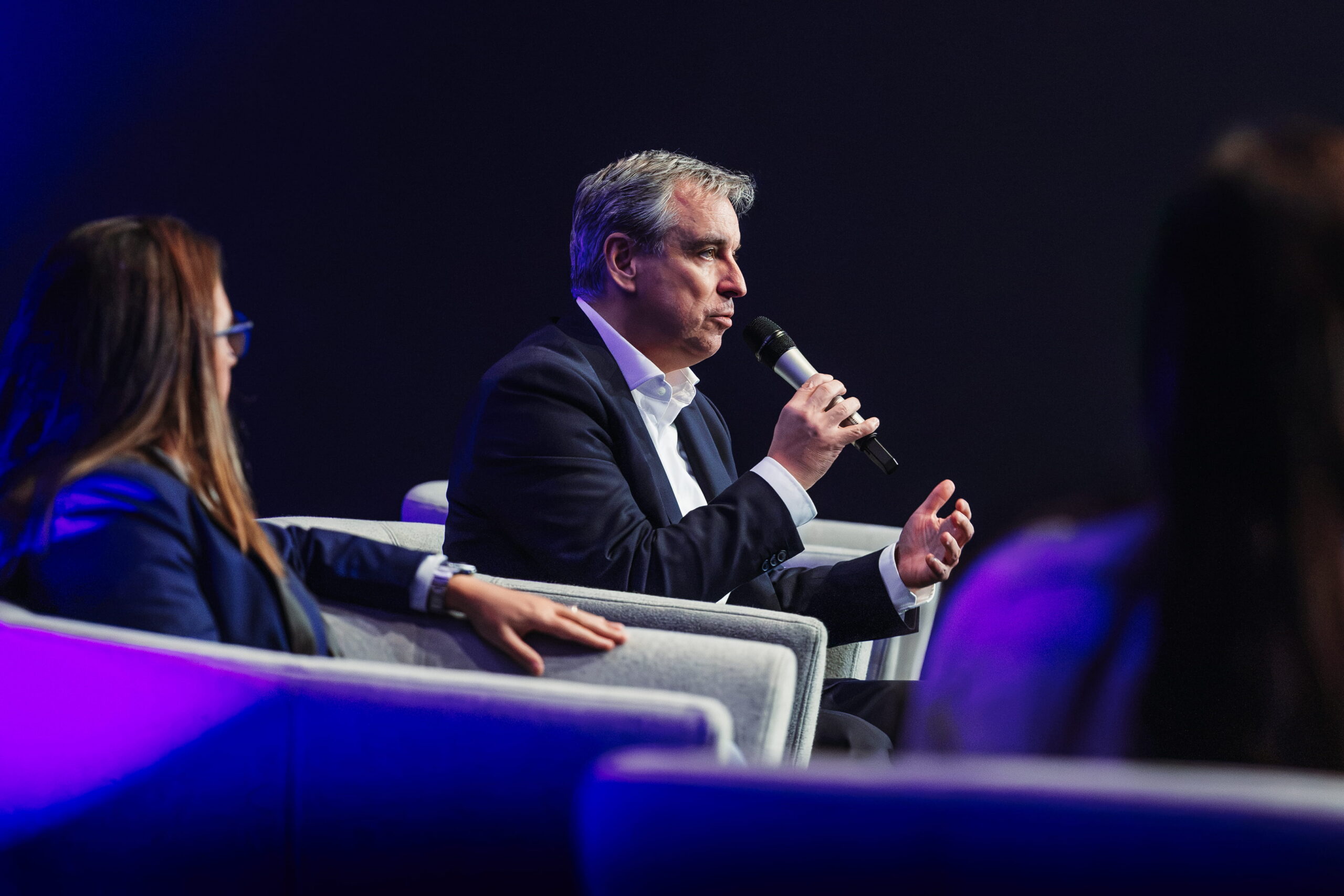


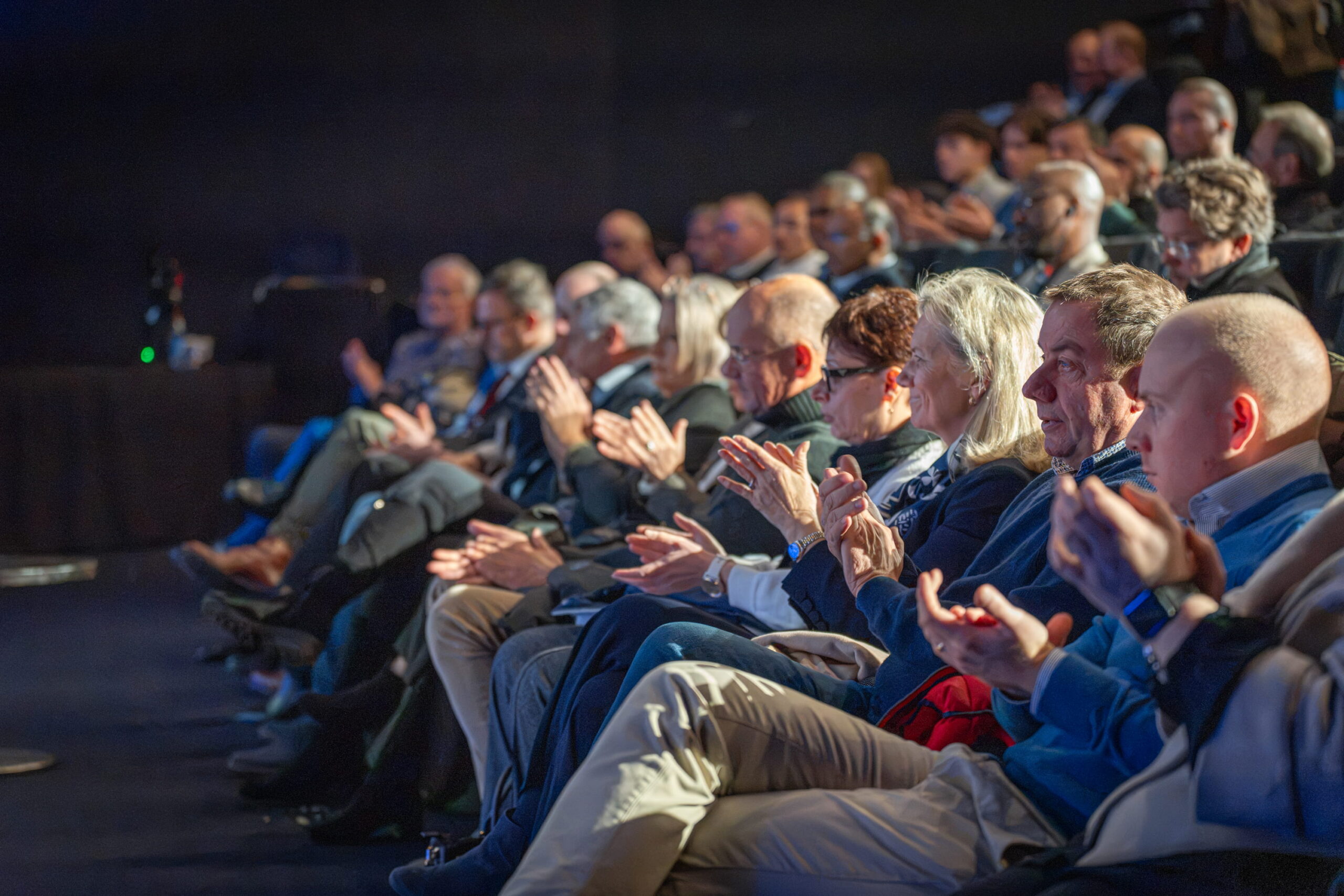
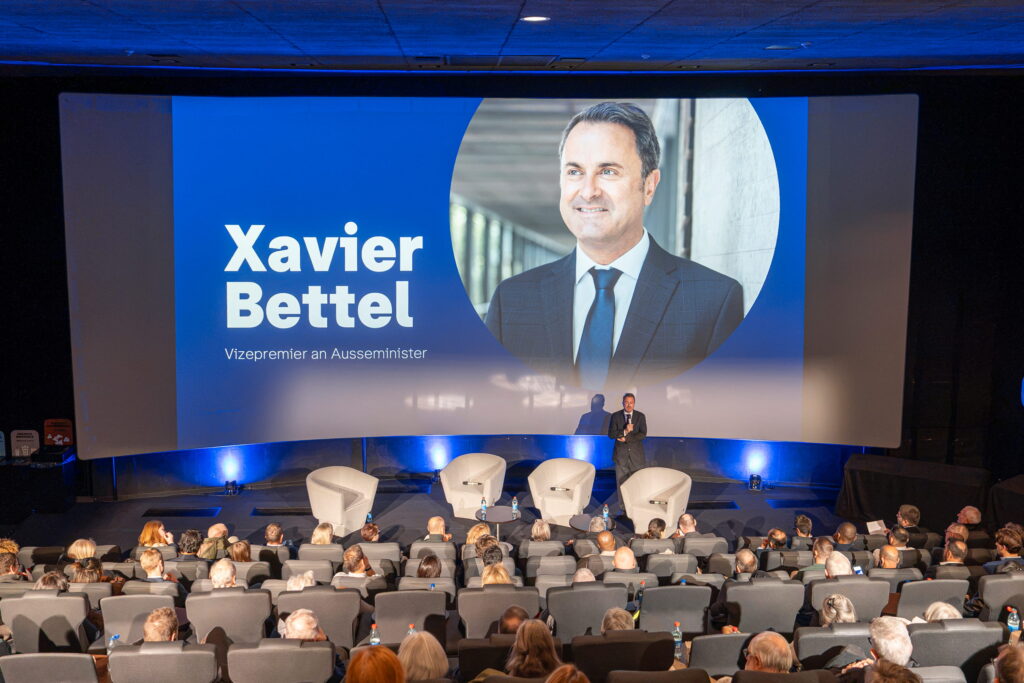
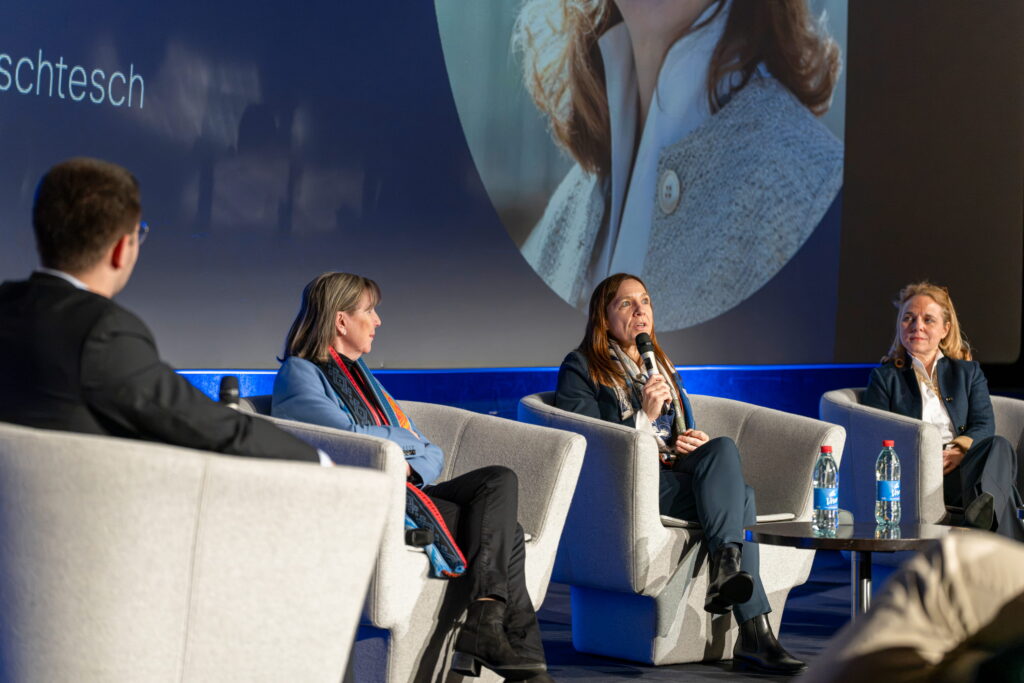
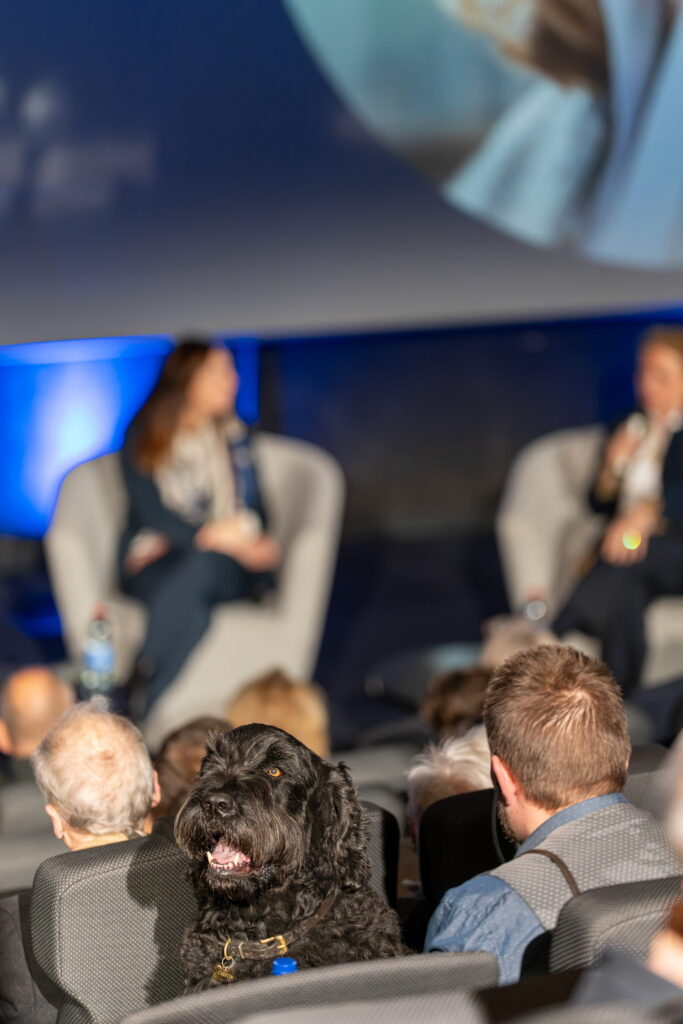
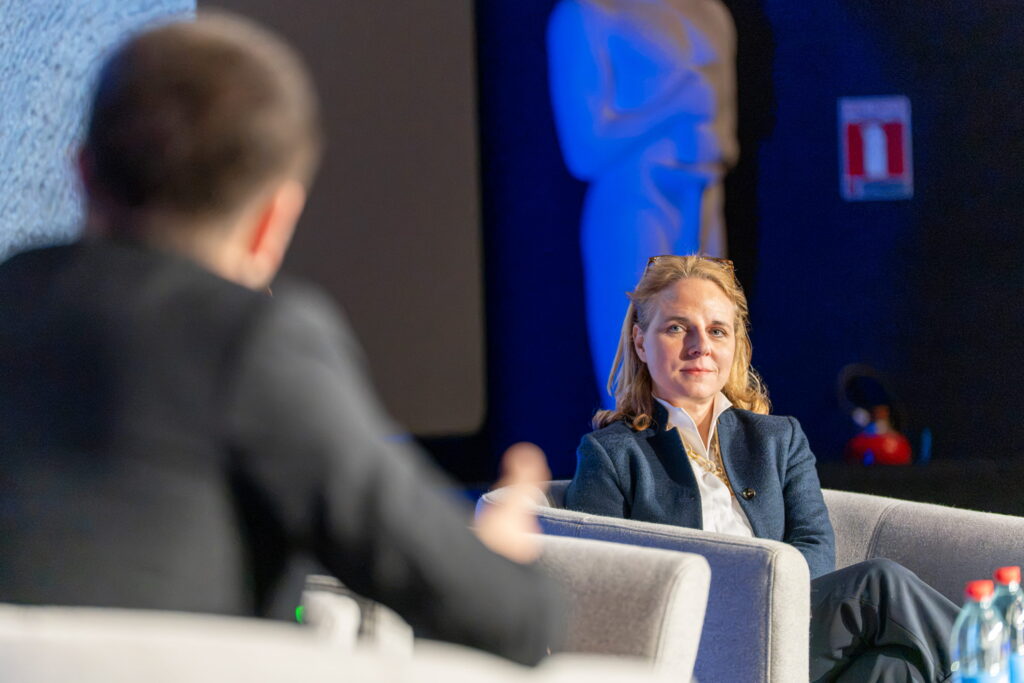
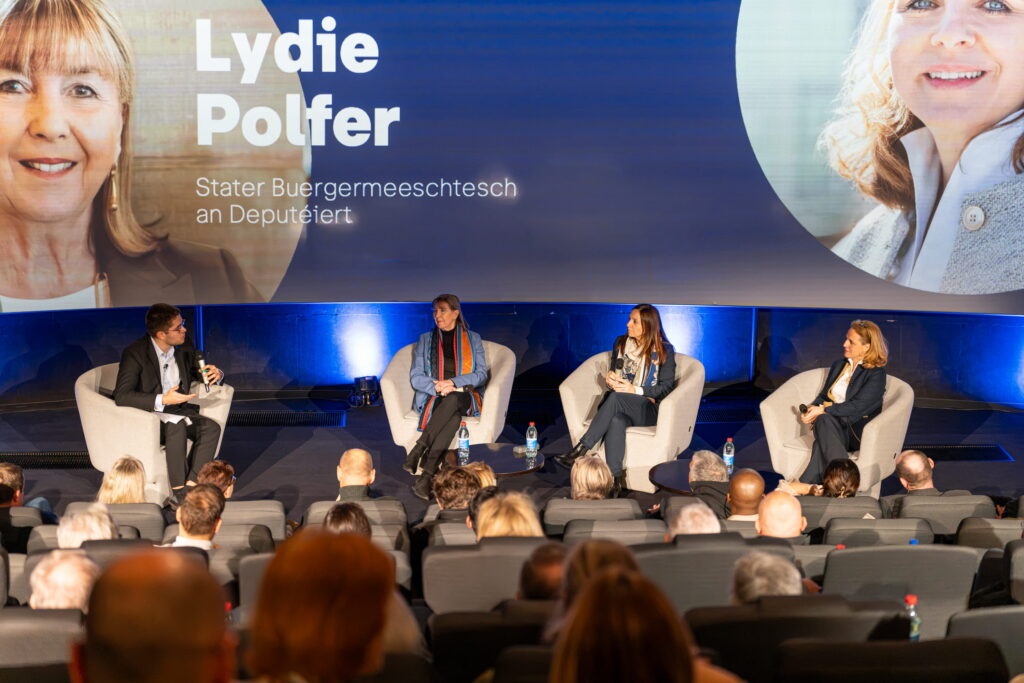
How can we prepare Luxembourg for the future? That question was at the heart of the final event in the DP’s series of discussion evenings across the country’s constituencies, held on Monday 23 November 2026 at Ciné Utopia in Limpertsberg. Deputy Prime Minister and Foreign Minister Xavier Bettel, Minister Stéphanie Obertin and MPs Corinne Cahen, Lydie Polfer, Guy Arendt, Patrick Goldschmidt and Gérard Schockmel joined residents for a constructive exchange. Sam Elsey of the Jonk Demokraten moderated the evening.
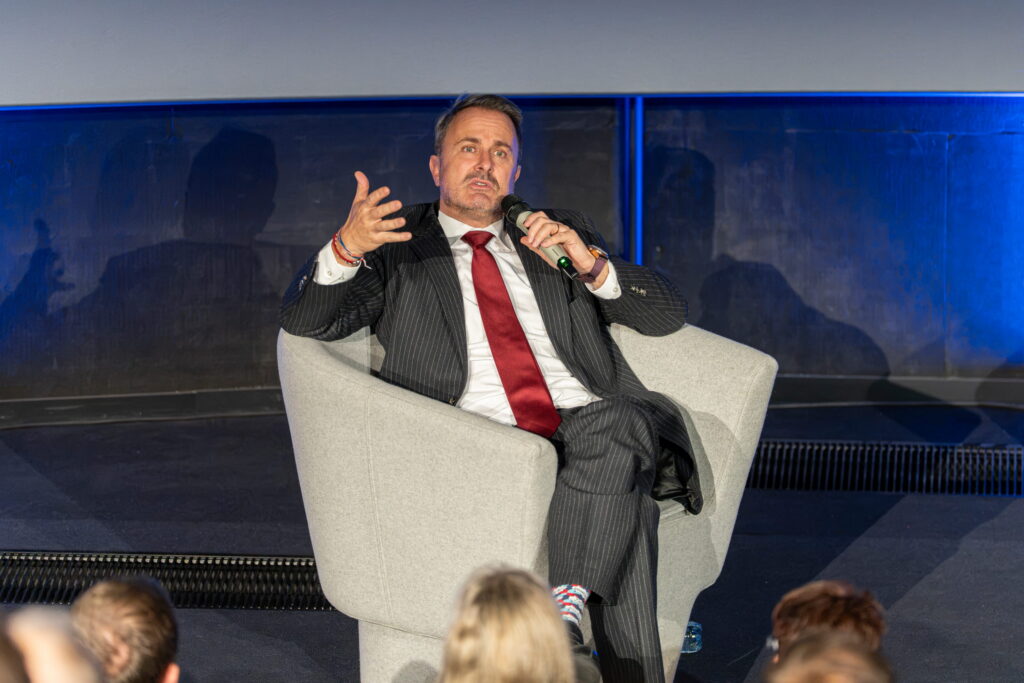
Xavier Bettel began by stressing the importance of taking people’s everyday concerns seriously. Whether the issue is energy prices, security or pensions, politicians must listen, seek solutions and take responsibility, even when the decisions that need to be made are not always popular.
“I don’t want to live in a country where, at the end of the month, people have to ask themselves: will I be able to make ends meet?” – Xavier Bettel
The measures agreed through the tripartite talks show that the government, employers and trade unions can find common solutions despite differing interests. Easing the pressure on households and meeting our responsibilities towards future generations must go hand in hand.
A modern public administration that includes everyone
For Stéphanie Obertin, the minister responsible for digitalisation, the digital transition must first and foremost make working people’s lives easier. Guichet.lu now has a conversational digital assistant to help users find the information they need. On MyGuichet.lu, meanwhile, existing data is already making an increasing number of administrative tasks simpler, including completing tax returns.
Personal assistance must remain available too. The minister announced a mobile Guichet service that will travel around the country to help people with their paperwork. The existing city office will remain open, with an additional branch in the Gare district.
Stéphanie Obertin also explained how data, artificial intelligence and quantum technologies can advance research and the economy. Luxembourg must retain control over its sensitive data, which is why the government is investing in secure infrastructure within the country. Digital sovereignty is also a priority in the use of artificial intelligence, including through the partnership with Mistral AI, a French company that also specialises in solutions for the public sector.
“Data already has value when it is first collected. Reusing it makes it even more valuable.” – Stéphanie Obertin
A city where people can thrive
MP Corinne Cahen linked climate action to quality of life and Luxembourg’s energy independence. Generating our own electricity, for example through solar panels, reduces dependence on fossil fuels. More trees and green spaces, along with less paved-over land, would help towns and municipalities cope better with heat. The trees that will provide shade tomorrow need to be planted today.
The Luxembourg City alderwoman also focused on personal independence. Public policy must make it easier to combine work and family life while remaining financially independent. She cited the reform of parental leave, which enables many more fathers to take it. More flexible working hours could also better accommodate different stages of life, where employees want them. That is why, throughout its thirteen years in government, the DP has advocated policies that reflect the way people live today.
“If we want to preserve solidarity, we need policies in which everyone has a place: employers, employees and the self-employed alike.” – Corinne Cahen
MP and Mayor of Luxembourg City Lydie Polfer described the challenges facing a city whose population has grown by almost a third in ten years. More homes are needed, but so are schools, sports facilities and places where people can meet.
The City is investing heavily in housing: in its own building projects, in land and in the purchase of homes off plan. These purchases, known as VEFA projects, allow developments to be completed that would otherwise stall because buyers lack the confidence to commit. Young people in particular must be able to find a place in the city where they can build their future.
Lydie Polfer also highlighted the strong sense of community in a city where around 70 per cent of residents do not hold Luxembourgish nationality. Attending the same schools, taking part in sport and sharing cultural activities all help strengthen that cohesion.
Freedom needs security
Safety in public spaces was another key topic. Lydie Polfer called for close cooperation between the police, the justice system, health services and social services. A stronger police presence must be backed by an effective justice system and consistent prosecution of offences.
At the same time, people with addictions or psychiatric conditions need appropriate care. The City therefore also invests in social support and facilities that offer shelter and assistance. Helping vulnerable people and tackling organised drug crime must be considered together.
“Without security, there is no freedom. People who have to live in fear no longer feel free.” – Lydie Polfer
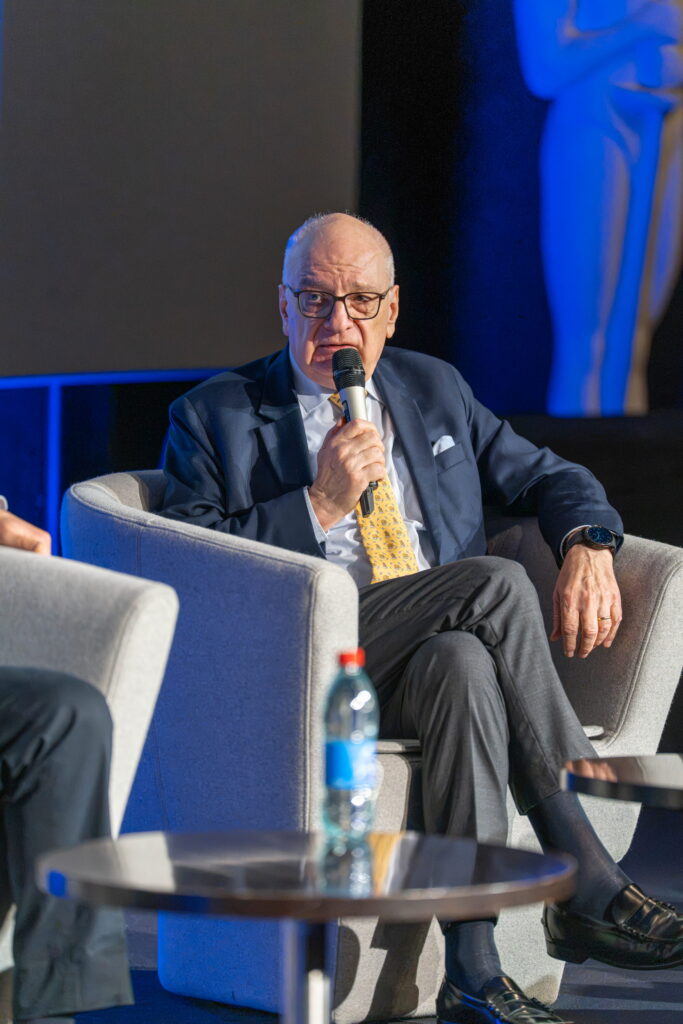
In the second half of the evening, MP Guy Arendt explained how climate action and economic development go hand in hand. Businesses need financial support and straightforward administrative procedures to operate more sustainably. Agriculture can also contribute to the energy transition through agrivoltaics, combining farming with solar power where appropriate. Food production must remain the priority.
Turning to economic diversification, Guy Arendt highlighted artificial intelligence, the space sector and defence technologies with civilian applications. Luxembourg is developing new sectors, supporting start-ups and attracting skilled professionals. Keeping that talent in the country over the long term is just as important.
“It is not enough to bring them here only to see them leave again. We need to give them reasons to stay; we need to keep them here in Luxembourg.” – Guy Arendt
Tax reform that reflects people’s lives
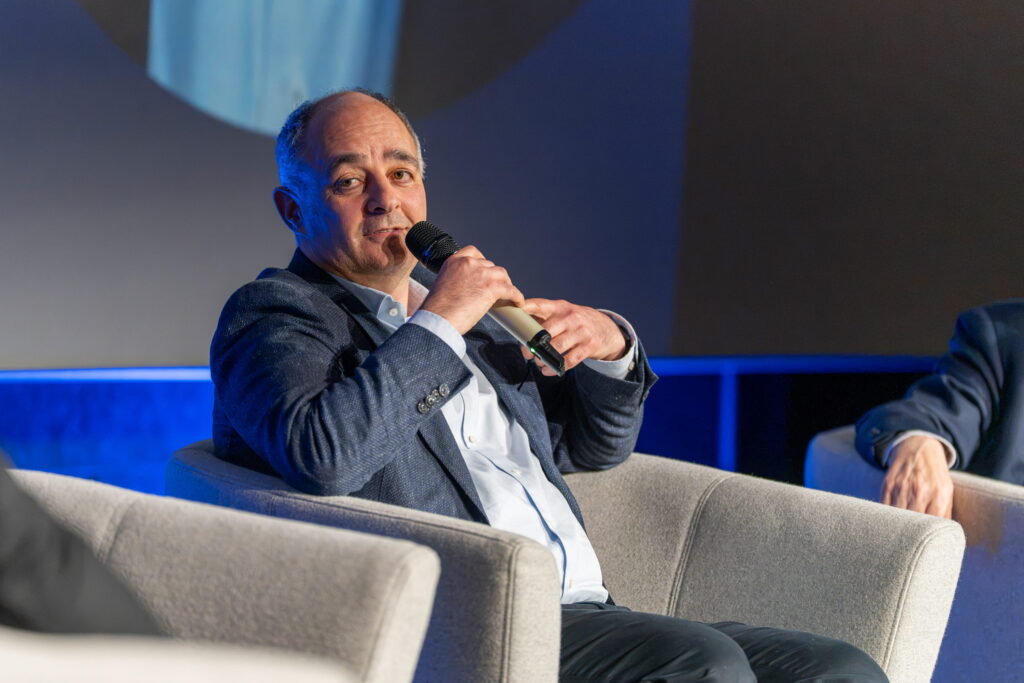
MP and tax expert Patrick Goldschmidt presented the single tax class U, which will take effect in 2028, fulfilling a longstanding DP demand. The basic structure of the current tax system dates back to 1967. Since then, the way people live, and particularly the role of women in society, has changed fundamentally. Taxation must reflect that reality.
Individual taxation means that marital status will no longer determine how people are taxed. It also means that the death of a spouse will not result in an additional tax burden. Patrick Goldschmidt highlighted the benefits for people currently in tax class 1, including many young people at the start of their careers. The tax-free allowance will increase substantially. A twenty-five-year transition period is planned for those who would be better off under the old system. Many people currently in tax class 2 will also benefit from the new tax schedule.
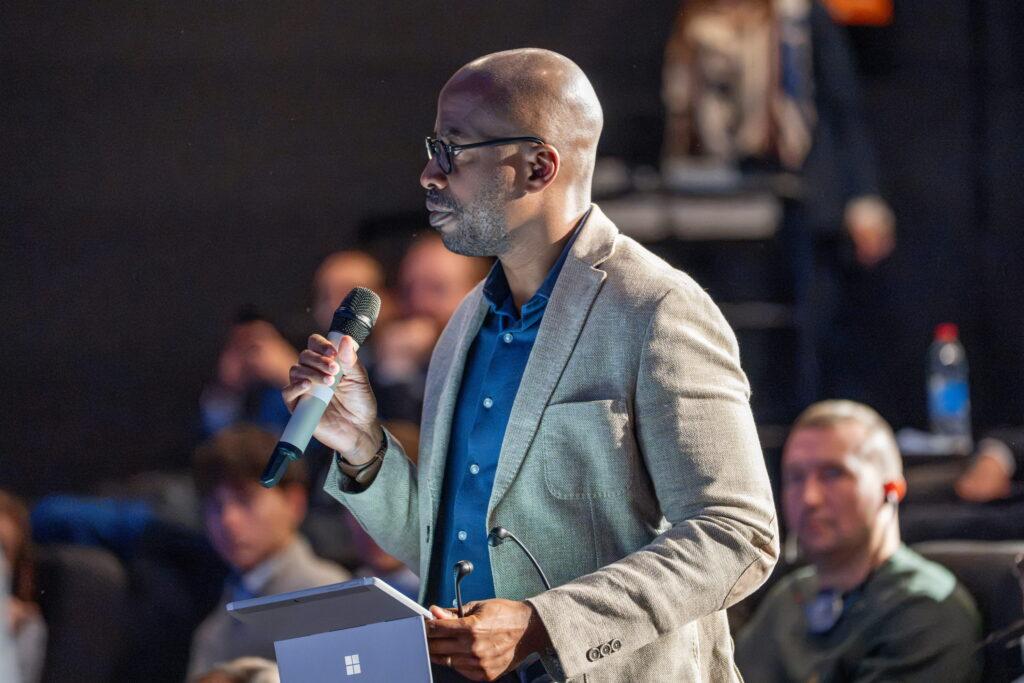
Asked by an audience member how public investment would be funded, he stressed that the projects already announced would continue to receive funding. Tram extensions, new schools and sports facilities would not be jeopardised by the reform. He expressed his conviction that higher disposable incomes also support spending and investment, generating further tax revenue in turn.
“People get that money back and can spend it. […] And when people have more, they can spend more.” – Patrick Goldschmidt
During the questions from the audience, a school student from Beggen raised concerns about congestion, late buses and the many roadworks. Patrick Goldschmidt explained that buses remain caught up in general traffic on many routes because dedicated bus lanes are not available everywhere. The student then asked why the works were not better coordinated. Patrick Goldschmidt pointed out that schedules are often also determined by work on sewers, gas pipes and electricity networks. He shared the frustration at the number of construction sites, while explaining why not every project could be postponed.
Digital security and everyday concerns
MP Gérard Schockmel called for stronger outpatient care. Alongside hospitals, a well-distributed network of medical practices is needed to make it easier for people to see a GP or specialist. Medical practice companies are intended to make it easier for doctors to work together and to offer more treatments and procedures outside hospital.
“We are creating a legal framework. We are providing a degree of certainty. That is how we want to strengthen outpatient care.” – Gérard Schockmel
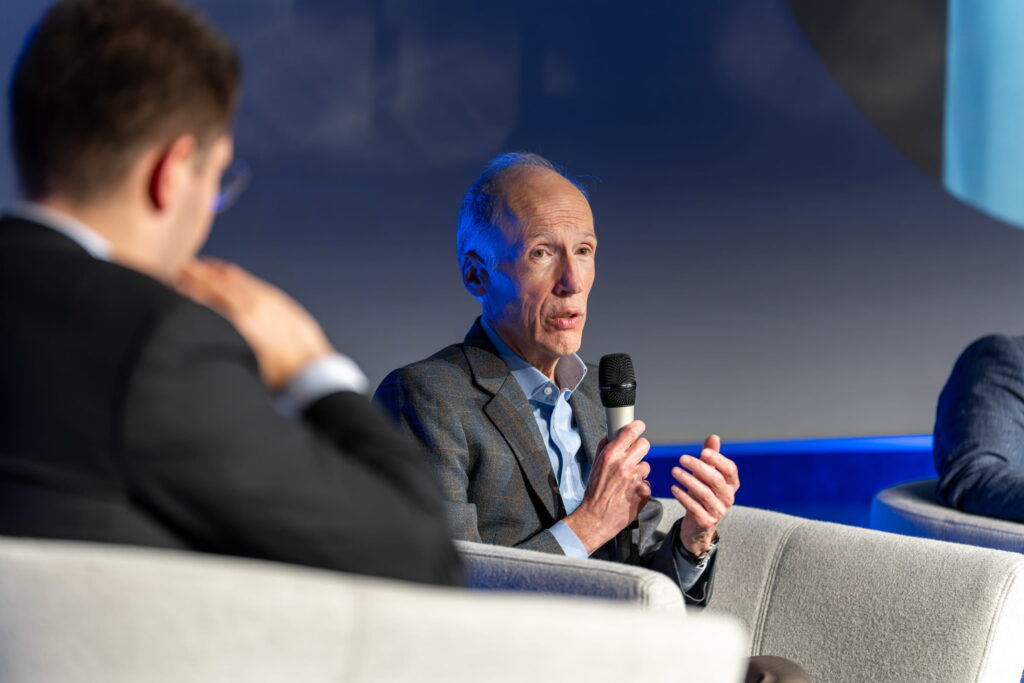
To ease pressure on emergency departments, he also advocated expanding access to diagnosis outside hospital, through consultations as well as laboratory tests and radiological examinations.
An audience question addressed language barriers in hospital. Gérard Schockmel stressed that digital translation tools and AI could improve communication between patients and healthcare professionals.
He then turned to the dangers of cyberattacks. These involve more than stolen data: they can also be used for extortion or to shut down vital infrastructure. Central government, municipalities, small businesses and residents all need better protection. Stronger security requirements, international cooperation and greater awareness of fraud are essential parts of that effort.
A more autonomous Europe
Responding to a question from the audience, Xavier Bettel called for closer European cooperation on defence and a common security industry. National interests too often prevent Europe from using its resources more effectively.
Greater autonomy does not mean isolation. Europe must be better able to ensure its own security and defend its interests. As with the concerns people face in everyday life, the task is to take responsibility and find practical solutions.