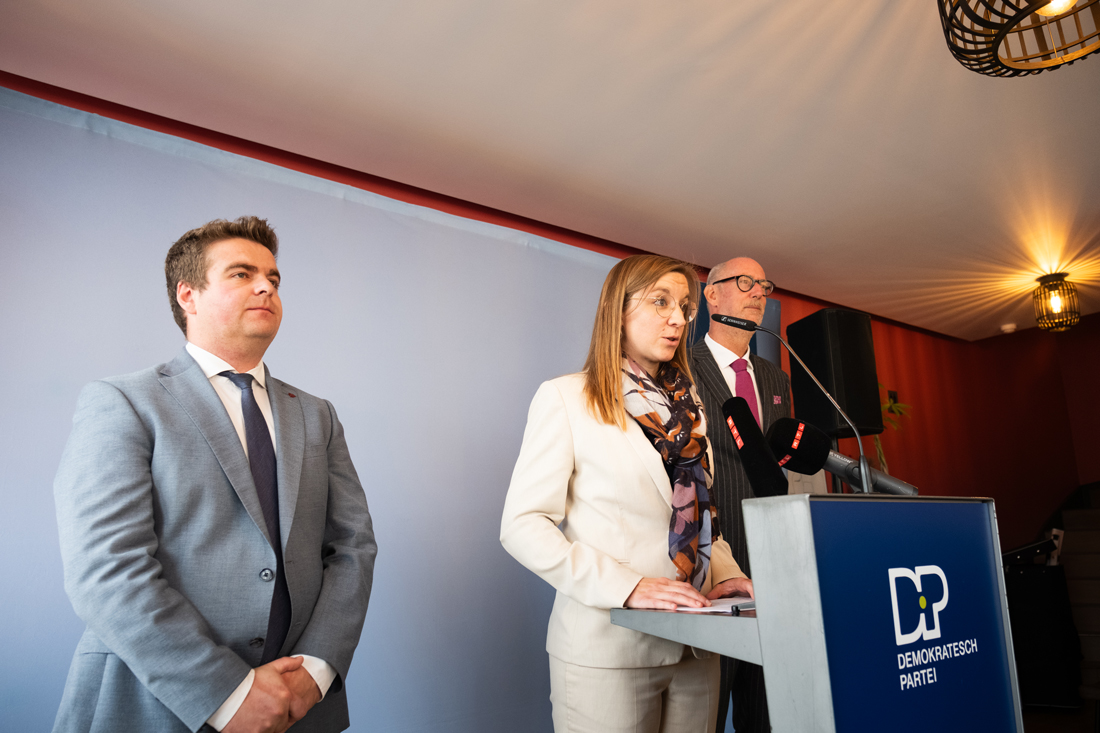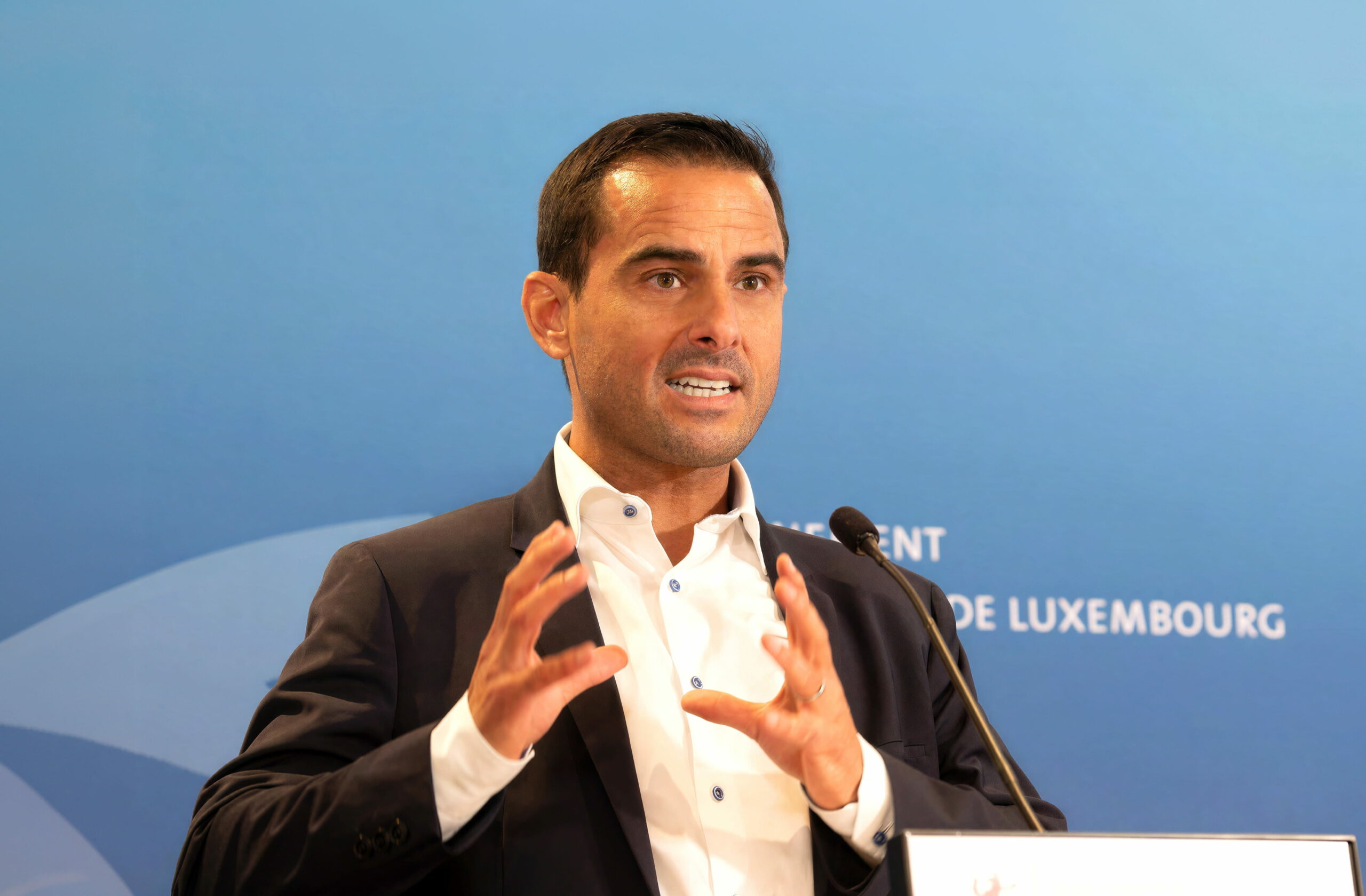



On 6 January 2026, DP ministers Claude Meisch (Education, Children and Youth) and Max Hahn (Family Affairs, Solidarity, Living Together and Reception of Refugees) presented a broad package of measures designed to strengthen the purchasing power of all citizens and, in particular, to support families and children over the coming years.
This reform fully reflects today’s realities. In the area of taxation, the Democratic Party has ensured that no individual and no family will be worse off, thanks to a long transition period.
Four measures to promote greater tax fairness and stronger support for families and children:
- A simple and fair tax system for everyone. From 2028 onwards, a single tax class will apply to all taxpayers, whether married or not, providing greater financial predictability in the event of changes in personal or family circumstances.
- Tax advantages for families with children, notably through an allowance of €5,400 per year for each child under the age of three.
- An increase in child benefits in 2027, by €45 for children up to the age of 12 and by €60 for children aged 12 and over.
- Harmonised and more affordable tariffs for all childcare services, through a reform of the childcare voucher system (chèque-service accueil), generating savings of €79 million per year for parents.
Four measures to strengthen social justice and combat poverty in Luxembourg:
- A social adjustment of childcare tariffs, allowing parents whose income does not exceed 3.5 times the social minimum wage to benefit from the first 24 hours of childcare free of charge.
- Targeted support for school-age children, amounting to up to €3,000 per child per year for low-income families.
- Action to combat old-age poverty, through a premium of up to €2,400 per year for seniors with modest incomes.
- Simplified and partly automated access to financial assistance for individuals and families in need, based on harmonised criteria allowing several forms of aid to be granted simultaneously in a simpler, faster and, in some cases, automatic manner.
These concrete measures will support citizens in their daily lives, ease the financial burden on families and offer children better prospects for the future. This is why the Democratic Party is committed to making substantial investments within the government:
- €900 million per year for a tax reform that equally values all family models and provides stability, even as life circumstances change.
- €250 million per year to increase child benefits and implement a family policy that sustainably strengthens financial support for parents.
- €300 million per year for affordable education and childcare services, a cornerstone of equal opportunities and every child’s future.
The DP promotes a vision of a modern and fair society that strengthens purchasing power and opens up future opportunities for everyone.

In Detail
Single tax class
From 1 January 2028 onwards, there will be only one single tax class in Luxembourg. This paradigm shift reflects a long-standing idea promoted by the Democratic Party and takes full account of the realities of today’s society. Patterns of living and family arrangements have changed profoundly over recent decades. Thanks to this fairer tax system, all individuals will be treated equally, whether married or not, and financial instability linked to major life events or divorce will be avoided.
This is a policy that adapts to real life, through a tax reform from which the vast majority of taxpayers will benefit. The tax-free threshold will be raised to €26,650 (compared with €13,230 currently under tax class 1), resulting in a significant reduction in the average effective tax rate. The new tax class is more favourable for all taxpayers currently in tax class 1, particularly young people, as well as those taxed under class 1a. The same applies to around 85% of taxpayers currently subject to tax class 2.
The Democratic Party has also ensured that the transition to the new system will take place over a long period. Taxpayers currently benefiting from the former tax class 2 will continue to do so under the existing “splitting” mechanism for a transitional period of 25 years, while retaining the option to switch to the new system. No one will lose out under the new tax class. In the event of death or divorce during the transition period, the benefit of the former tax class 2 tariff will be maintained for five years, compared with three years at present.
Parents—whether living together or separately—as well as single-parent families will also benefit from increased support, notably through tax relief of €5,400 per year for each child under the age of three. The single-parent tax credit will be increased to €4,008 per year, while the allowance for children not forming part of the household will rise to €5,928 per year. The deductibility ceilings for debit interest as well as insurance premiums and contributions paid by taxpayers will also be raised to €900, as will the ceiling for contributions paid under home savings schemes.
The flat-rate allowance for domestic expenses, assistance and care costs related to dependency, as well as childcare costs, will be increased from €5,400 to €6,000. Finally, the income brackets applicable to the deduction for extraordinary and unavoidable expenses that significantly reduce a taxpayer’s ability to contribute will be substantially revised.
As part of the tax reform, it is also proposed to introduce an indexation mechanism for the tax scale following three index tranches. This measure is intended to correct the increased tax burden resulting from monetary erosion caused by sustained inflation.
Increase in Family Allowances
Citizens who do not pay income tax are not forgotten. Social justice and support for families lie at the heart of the Democratic Party’s policy approach. This is why family allowances will be significantly increased from 2027 onwards:
- 0-5 years 307,35 +45 = €352,35 per month
- 6-11 years 330,58 +45 = €375,58 per month
- > 12 years 365,34 +60 = €425,34 per month
In addition, the back-to-school allowance will be increased:
- 6-11 years 115 +60 = €175
- > 12 years 235 +90 = €325
A targeted financial support scheme will also be introduced for low-income households with school-age children:
- 4-5 years €300 per year
- 6-11 years €1.000 per year
- 12-24 years €3.000 per year
Furthermore, the back-to-school allowance, the supplementary special allowance and birth grants will be automatically indexed, with the introduction of a fourth instalment for birth grants.
This represents a strong signal in the fight against child poverty. The aim is to ensure that every child can grow up under the best possible conditions and that their needs are met, regardless of their parents’ circumstances.
As part of the National Action Plan for the Prevention of and Fight against Poverty, additional measures were presented in December to support disadvantaged people. These include a premium of up to €2,400 per year for older persons with low incomes. Access to financial assistance for individuals and families in need will also be simplified and partially automated, through harmonised criteria allowing several forms of aid to be granted simultaneously, in a simpler, faster and, in some cases, automatic manner.
High-Quality and Affordable Childcare
As part of this reform, the Democratic Party is working to ensure equal opportunities for children by reforming the childcare voucher system (chèque-service accueil). From 2027 onwards, the objective is twofold: to provide substantial financial relief for parents amounting to several thousand euros per household per year, depending on circumstances, and to improve the quality of childcare services.
To ensure fairer billing that better reflects actual needs, new billing rules will be introduced. A uniform tariff will apply across all education and childcare services, and no additional supplements will be permitted. Billing will be based on the child’s registered hours rather than on fixed hourly packages imposed on parents.
The childcare voucher scale will be adjusted for low-income households. In order to combat child poverty, especially households with an income equal to or below 3.5 times the social minimum wage will benefit from targeted financial relief. Children aged one to four cared for by “assistants parentaux” will also be entitled to 20 hours of free childcare per week. Overall, families will save approximately €79 million per year.
The reform also includes investments in service quality, notably through improved staff-to-child ratios. Group sizes within education and childcare facilities will be reduced, ensuring more individualised support.
New rules and strengthened governance will bring greater transparency and improved management of the measures, ensuring that investments genuinely benefit children. The objective is to guarantee a consistently high level of quality across all forms of non-formal education and to ensure that, from 2030 onwards, every child has a guaranteed place in a crèche or maison relais.