

Organising mobility flows around the city is one of the greatest challenges of the Mobility Plan through 2035. The success of the tram shows that this mode of transport plays a central role in the mobility strategy. This is particularly true for the western part of the capital, which is set to undergo major developments in both transport and urban planning.
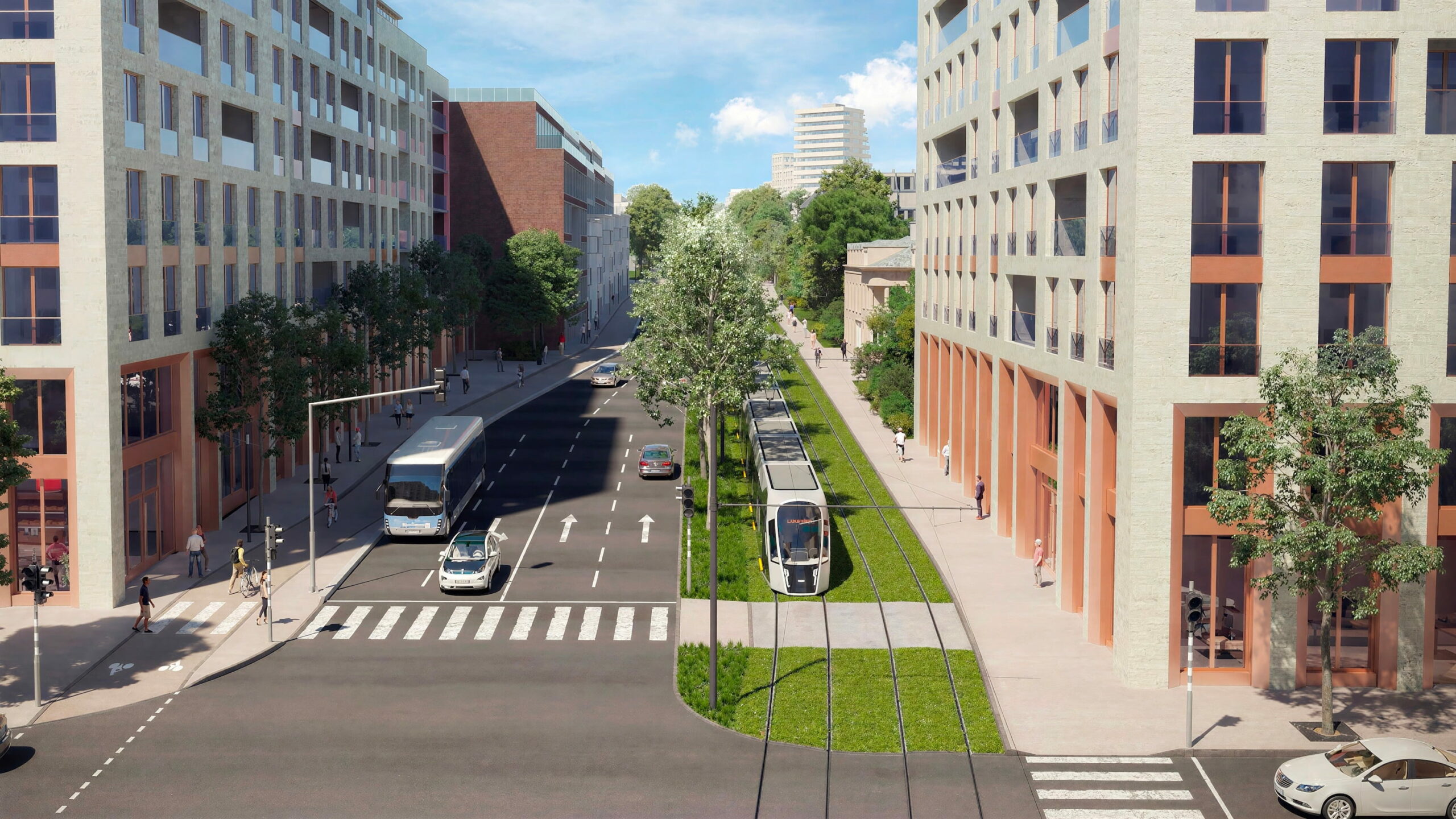
With this in mind, the Chamber of Deputies decided this week to extend the tram network along Route d’Arlon to the planned mobility hub near the Centre Hospitalier. This will be the first stage, before a later connection is built to the planned Park and Ride West facility in Merl.
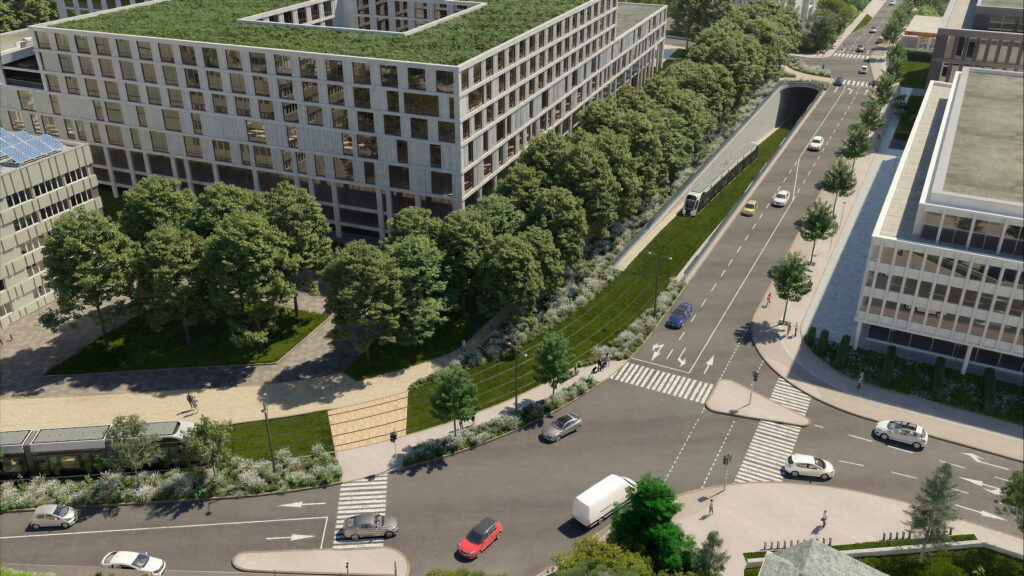
Four stops are planned along the route, which will be just over two kilometres long. The planned Silver Étoile development and the new Stade district, located on the former Josy Barthel stadium site, lie along the route. The line will, of course, also provide better access to the CHL hospital. Beyond the Josy Barthel site, between Rue des Foyers and Rue du Val Fleuri, the tram will run through a tunnel approximately 600 metres long.
The number of passenger journeys is expected to reach almost 2.8 million by 2035. This would correspond to 300,000 passengers per day, compared with the 125,000 people who currently use the tram. Almost half of all journeys in Luxembourg take place within Luxembourg City.
Future Funding for the RGTR Secured
The RGTR, or General Road Transport System, is the main regional bus service providing transport throughout Luxembourg, particularly in rural areas. It serves as a backbone of public passenger transport, while also providing connections to neighbouring countries and complementing bus services within the city.
Every day, 135,000 people travel on RGTR buses. This week, the Chamber of Deputies adapted the legal framework governing the operation of the national bus service to ensure that the service continues to meet passengers’ needs and expectations in the future. The budget allocation introduced in 2021 has now been extended until 2038 and amounts to a total of €4.4 billion.
The reason is clear: an increasing number of people live and work in Luxembourg, and this trend is expected to continue. However, the objective is not only to finance the current bus network, but also to adapt it to structural developments in mobility over the medium and long term. Services and safety will therefore be improved through:
- Expansion of the bus network;
- Improvements in service quality;
- Better punctuality;
- More flexible adaptation of the network to people’s needs;
- Improved comfort, for example through air conditioning;
- Upgrades to drivers’ cabins and video surveillance systems.
RGTR bus routes are operated by private bus companies under public contracts. The tendering procedure for the current contracts was launched in 2020. As these contracts did not all begin at the same time, funding must be aligned with their actual duration. Funding has now been secured for the current contracts and for those to be concluded up to 2032.
The new budget also provides funding for additional RGTR connections. These include temporary routes introduced during major construction works, connections to industrial areas and new routes forming part of the reorganisation of the network in the south of the country.

Photovoltaic Installations Along Motorways to Be Permitted in the Future
On the final sitting day of the 2025–2026 parliamentary session, the Chamber of Deputies also addressed the energy transition, one of the greatest challenges of our time. Luxembourg must become less dependent on energy imports and make use of as many suitable locations and surfaces as possible to generate renewable energy. Bill 8675 amends, among other legislation, the laws of 1967 and 2009 concerning the Roads Fund and road access permits.
Photovoltaic installations form one part of this broader effort. In the future, solar panels may be installed under certain conditions and within clearly defined areas alongside motorways. These areas include the 25-metre zones bordering motorways and the 15-metre zones alongside bypasses and roads linking motorway junctions to national roads.
These so-called zones non aedificandi alongside motorways and major transport routes are areas where construction is generally prohibited and where land use is regulated on grounds of public interest or through development plans. These areas have considerable potential and offer the advantage that no additional land needs to be sealed or developed. The installations must be designed so that they can be removed easily if necessary.