
To mark the opening of the Tripartite talks, the social partners gathered this week in Senningen. This crisis-management instrument bears the hallmark of the Democratic Party, as a look back through the history books shows.
Oil Crisis Brings Economic Boom to an End
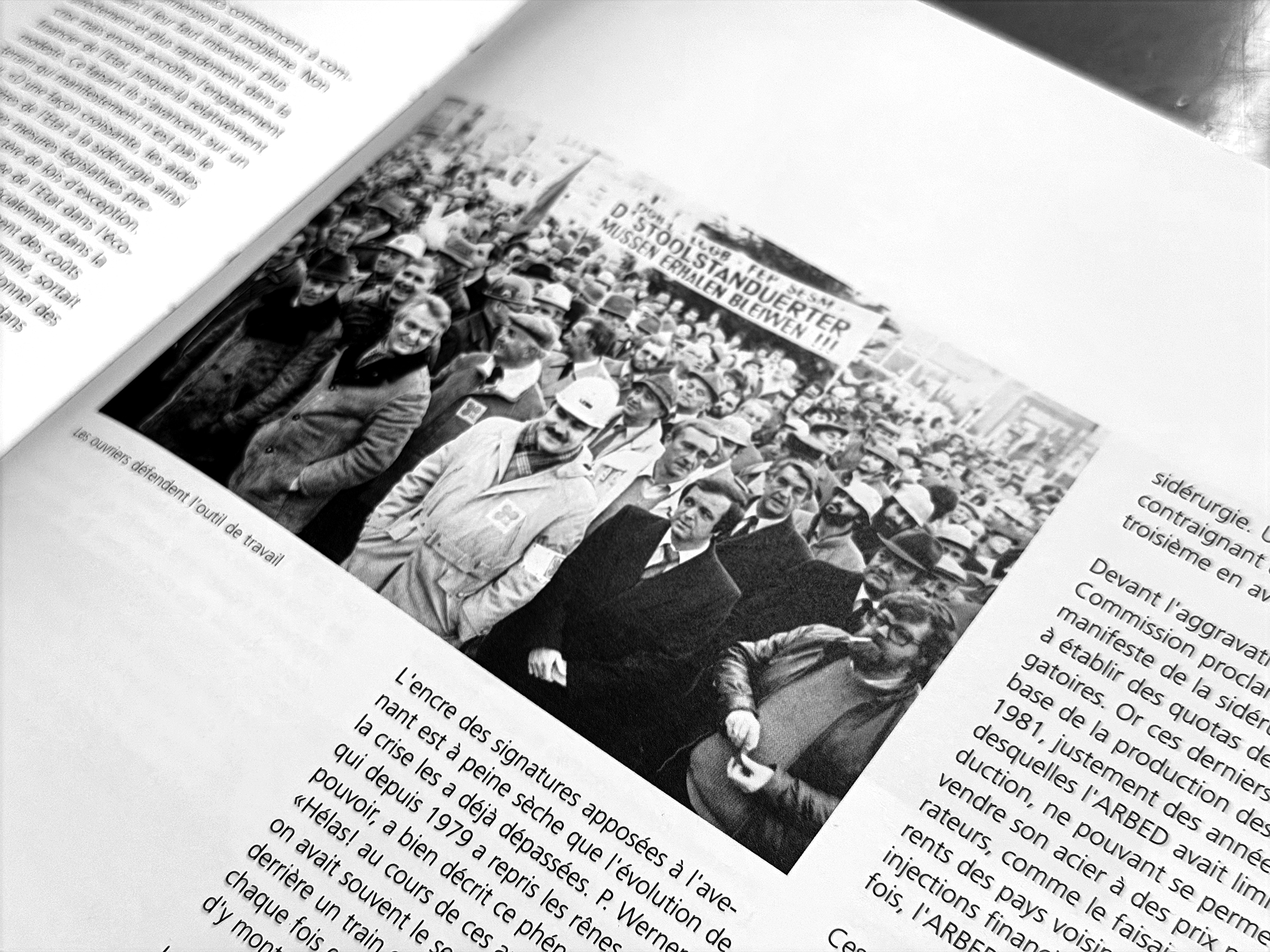
After the great oil shock of 1973, the global economy was thrown into turmoil. The steel sector, too, collapsed; in 1975 alone, production fell by more than a quarter. This was a trend that continued in the years that followed. Arbed, at the time one of the world’s largest steel producers, was hit not only by a cyclical downturn, but by a structural crisis. The Luxembourg economy felt the consequences. The long period of economic growth that had followed the Second World War came to an end.
Until the end of the 1960s, the company was the engine of the Luxembourg economy, making a major contribution to the state budget and to employment. At the height of its history, Arbed generated one quarter of the country’s gross national product and employed around 20 percent of Luxembourg’s workforce. The company would remain the country’s largest employer well into the new millennium. Last year, however, ArcelorMittal was only the eighth-largest employer.
Countermeasures to Save Arbed
At the beginning of the 1970s, pressure from the trade unions was considerable. On 9 October 1973, the LAV (Lëtzebuerger Aarbechterverband), the predecessor of the OGBL, mobilised around 40,000 people. To this day, it remains the largest demonstration ever held in Luxembourg.
In 1978 and 1979, Arbed consolidated at a low level. The Thorn-Vouel/Berg government supported the company through the law of 26 July 1975, aimed at preventing layoffs caused by the economic downturn. Prime Minister Gaston Thorn described it as an extraordinary response to an extraordinary situation.
In October of the same year, the Economic Council was created, bringing together the government, employers and trade unions. The committee was tasked with monitoring the labour market and deciding on measures to support companies in difficulty.
In December 1976, a Tripartite conference decided to create the DAC (Division Anti-Crise). The state took over thousands of Arbed employees so that they could carry out work within the company itself, but also projects of national interest; these were employees who would otherwise have become unemployed. The government introduced the solidarity tax to finance these emergency employment measures.
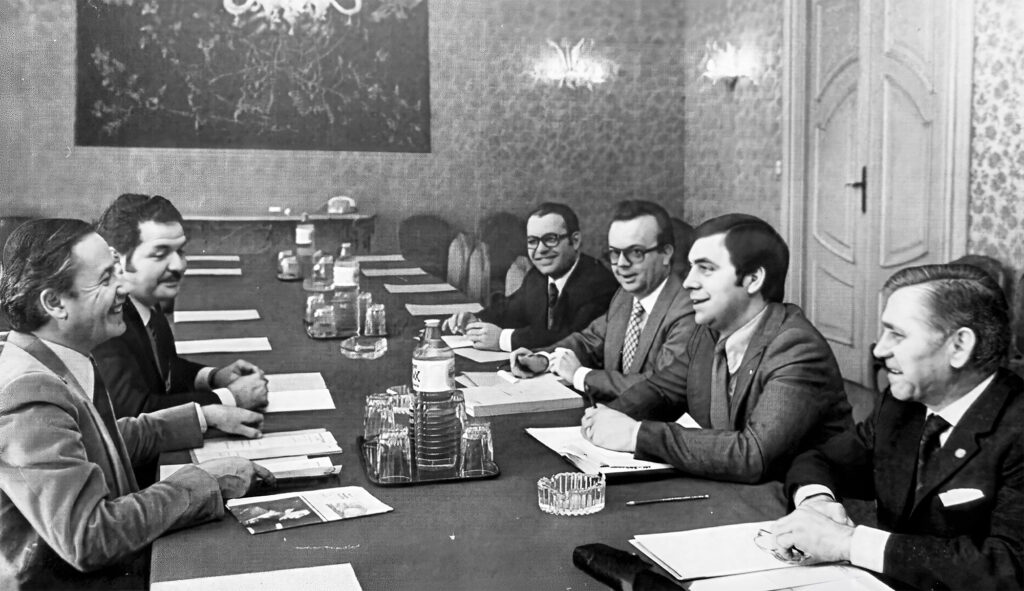
Here is a meeting between Prime Minister Gaston Thorn and Benny Berg, Deputy Prime Minister and Minister of Labour and Social Affairs, with representatives of the then LAV (Lëtzebuerger Aarbechterverband, predecessor of the OGBL). In the centre is LAV General Secretary John Castegnaro, on the right Vice-President René Hengel.
Birth of the Tripartite
With the law of 24 December 1977, the DP-LSAP government institutionalised the Tripartite Coordination Committee, which still convenes in times of crisis today. The law also introduced compulsory early retirement at the age of 57 for employees in the steel industry. Those who voluntarily left Arbed or moved to another sector received financial support.
The Tripartite proved its worth during the steel crisis and was therefore extended over the years to the economy as a whole. Today, the model is also activated in response to major economic and social challenges, such as inflation, unemployment, wage indexation and the single-status reform. For a long time, it was a guarantor of social peace and of the so-called Luxembourg model. In this way, many problems could be resolved without excessive social tensions.
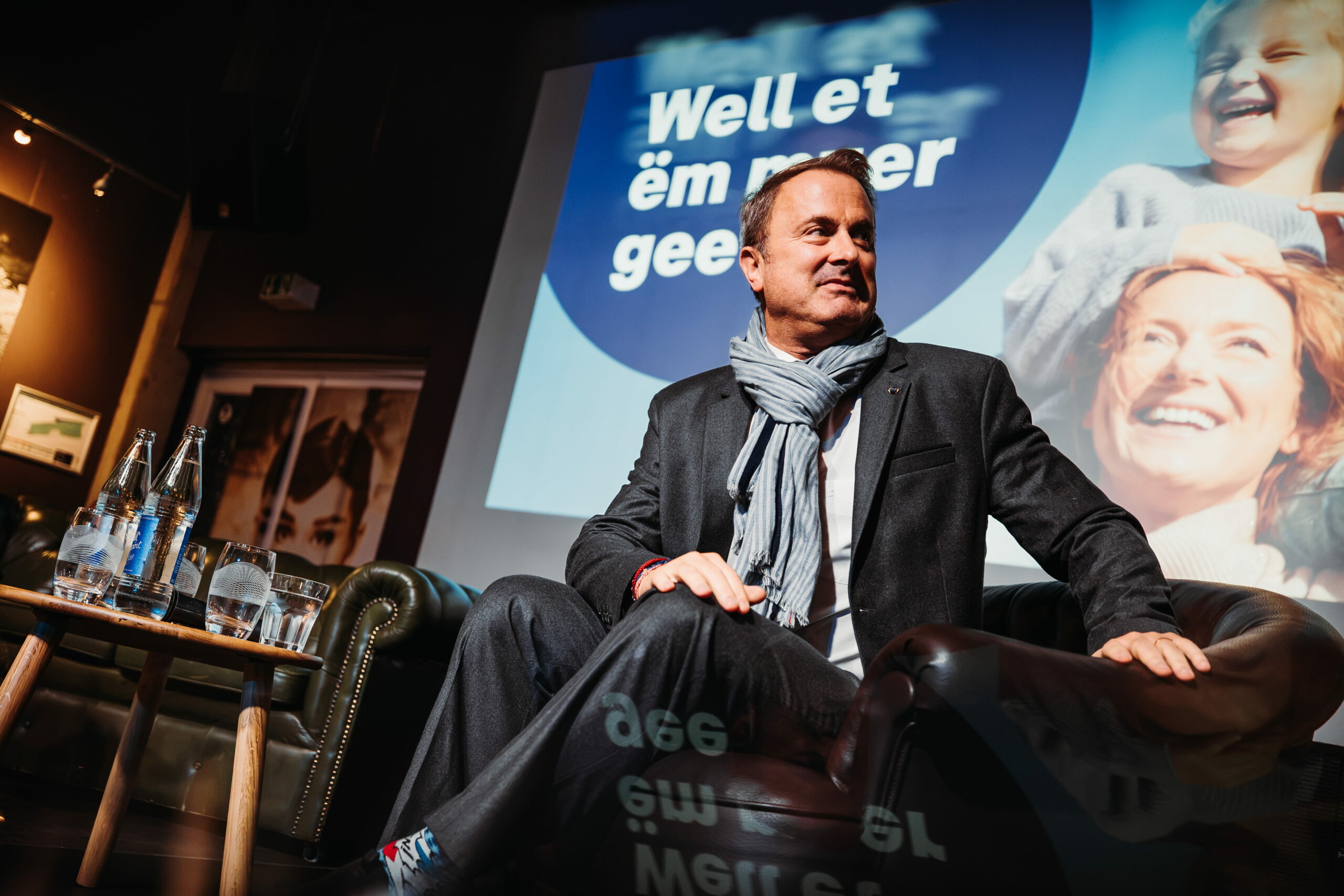
Although the Tripartite has lost influence since the mid-2000s, as common agreements between the three sides have become increasingly rare, it remains an important asset of the Luxembourg model: a social dialogue that the DP clearly and firmly supports. Former Prime Minister and current Foreign Minister Xavier Bettel, in particular, has repeatedly succeeded, through his diplomatic skill, in bringing the social partners back to the same table, ensuring that dialogue could continue.